Bringing Code Governance to Kiro

Your coding agent knows the language. It doesn’t know your company.
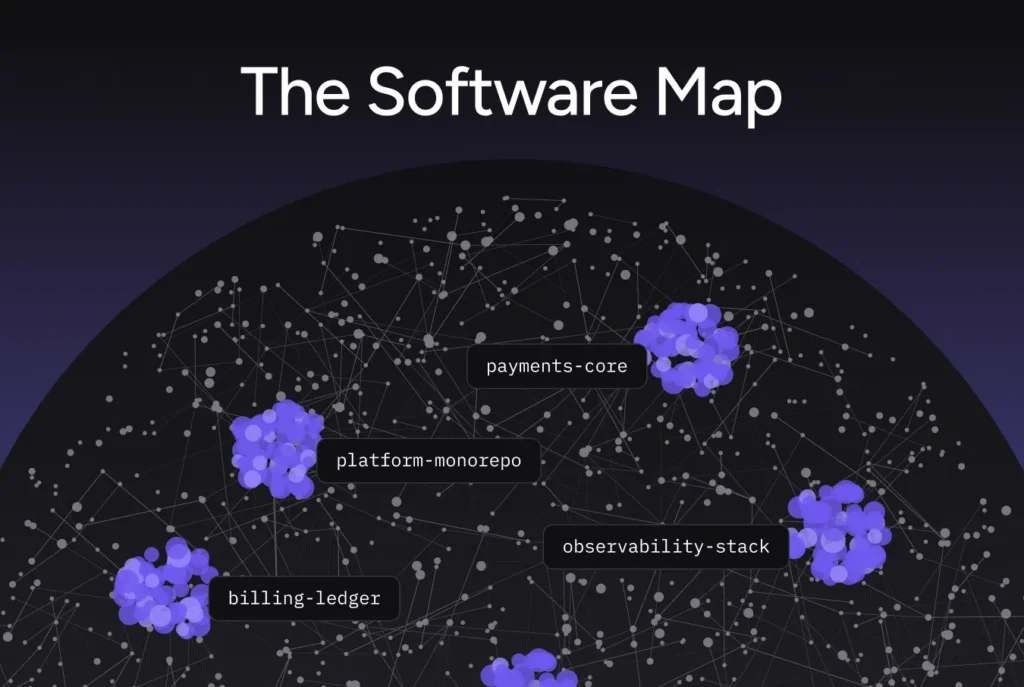
It can’t see the service that consumes the API you just changed, the convention your team settled on last quarter, or the three PRs where a reviewer already rejected this exact pattern. That context exists somewhere in your organization. None of it is in the workspace.
Qodo’s Kiro Power closes that gap. It brings Qodo, the AI Code Quality and Governance Platform, directly into your Kiro, the spec-driven agentic IDE from AWS, so agent-generated code is checked against your organization’s standards and your wider codebase while you’re still coding instead of after you’ve pushed.
Why Qodo in Kiro
Enterprise codebase context, applied at coding time. Kiro’s agents see your workspace. Qodo brings the rest: full codebase context, your organization’s best practices, and self-learning rules, so review reflects how your company writes code rather than generic style advice.
Catch PR comments before they’re written. Qodo carries the knowledge of your review history, a year of PRs and a thousand reviews, and knows what your senior engineers are about to flag. With Qodo code review in Kiro, those findings surface in the IDE before the PR exists. Fewer review ping-pongs, higher-quality code on the first push.
Shift problems left. Cross repository breaking changes, rule violations, and requirement gaps get caught and fixed locally, where remediation is a quick edit instead of a review cycle.
How Qodo runs inside Kiro
Kiro extends its agents through Powers: a POWER.md steering file with keyword-triggered frontmatter that loads specialized context on demand, instead of holding every tool definition in the context window all the time.
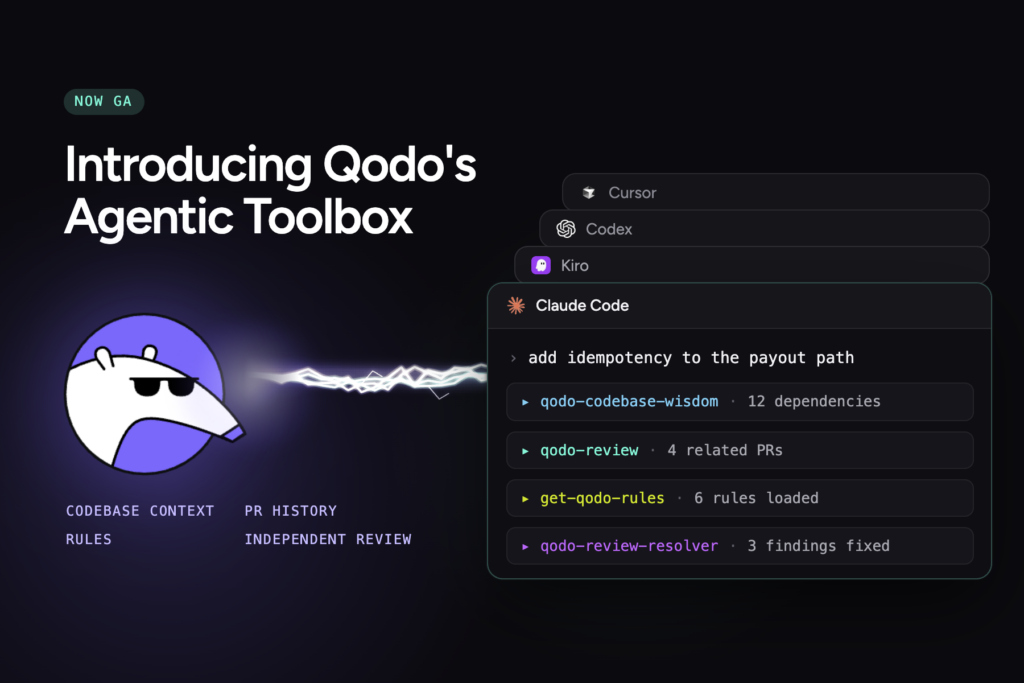
Qodo’s Power runs on Qodo’s command-line client, which sits on the developer’s machine and connects it to your Qodo tenant. Signing in once makes the platform’s capabilities available as commands the agent can call: review the working branch, search your organization’s rules, pull open findings from a PR review session, query the indexed codebase.
What the Qodo Kiro Power does
One consolidated power routes each request to the right Qodo capability, running through the Qodo CLI’s managed tools. Ask in plain language, and Kiro loads only the capability that matches:
| Capability | Ask in Kiro | Why it matters |
| Code review | “qodo review my code” | Everything Qodo flags in PR review (bugs, correctness, standards violations, cross-repo breaking changes) surfaced in the Kiro IDE before the PR exists. Cuts PR review time and raises code quality. |
| Rule enforcement | “Get qodo rules for this task” | Your agent codes against org standards from the start, with conventions applied during generation instead of corrected after. |
| Resolve issues | “Resolve the issues qodo found during review” | Fix review findings without leaving Kiro. The review knows what’s new, pre-existing, or already resolved. |
| Codebase context | “Ask qodo how the payments flow works” | Answers grounded in full codebase and cross-repo context, so changes are made with the architecture in mind. |
Developers get high-precision review with full codebase context before code ever reaches a pull request, and resolve findings without leaving Kiro.
It’s also safe by construction: no MCP server, and the power never posts to your git forge. Resolving a finding means editing local code, and only after your confirmation.
Spec-driven development meets spec-driven review
Kiro helps the developer give the coding agent a better plan. Instead of a one-line prompt, the agent gets structure: what to build, in what order, under what constraints. Better input, better generated code, and a developer who thought the work through before the agent started typing.
A plan for the agent is not a specification of requirements. One says how to code. The other says what was actually asked for, and it lives in the ticket, not in the IDE. Kiro improves the first. It doesn’t produce the second, and nothing in that loop checks the code against it.
That’s the check Qodo adds. The requirement gap agent pulls acceptance criteria straight ticket management systems like Linear and Jira, and evaluates whether the change actually implements them, flagging what’s missing along with anything that crept in that nobody asked for.
Governance that scales across the org
For engineering leaders, Qodo power closes a loop. Standards live in one place: rules in Qodo, learned from your codebase and PR history, and enforced wherever code gets written, including inside Kiro. Agents pull the relevant rules before generating, review verifies the output against those same rules, and findings are tracked across teams, repos, and PRs.
The loop compounds over time. As you correct your agent, those corrections can become rule suggestions in Qodo, available in Kiro through the Qodo CLI’s skills alongside the Power. Each session makes the ruleset sharper, so the next coding session starts faster and the next review from Qodo is higher quality. One set of standards, consistent from generation to merge, improving with every session.
Getting started
- Install the Qodo CLI (requires Node.js ≥ 20):
curl -fsSL <https://get.qodo.ai/install.sh> | sh - Sign in:
qodo login - Add the power through Kiro’s Powers and reload.
Then just ask: “qodo review my local changes.”
Full setup and docs: Qodo Kiro Power on GitHub