How to Build a Scalable Code Review Process That Handles 10x More Pull Requests

TL;DR
- Code review breaks at scale the same way everywhere: queues grow, critical issues slip through, and reviewers waste time on formatting instead of architecture.
- The fix: separate enforcement from judgment. Automate tests, linting, and security checks before human review starts. Reserve human attention for intent, design, and trade-offs.
- This guide walks you through building that process 5 structural fixes, an 8-step checklist, and how platforms like Qodo handle the infrastructure that doesn’t scale manually.
Manual code review breaks at scale – reviews slow down, critical issues slip through, and senior engineers drown in repetitive checks. AI code review platforms automate baseline enforcement and risk detection across your entire codebase, catching broken access control and cross-repo impacts that human reviewers miss.
The result: 80% fewer PRs need human review, teams ship faster without sacrificing quality, and reviewers focus on architecture and intent instead of hunting for missing tests.
Your team ships 10x more pull requests than two years ago. You need a code review process that matches the scale.
I’ve spent the last decade building code quality systems at enterprise scale. Here’s the pattern I see everywhere: AI coding assistants boost output by 25-35%, but review still depends on senior engineers manually scanning diffs and enforcing standards one PR at a time. The bottleneck shifts from writing code to validating it.
The consequences are predictable:
- Review queues grow
- Critical issues slip through
- Burnt-out reviewers hunt for missing tests instead of evaluating architecture
The cost shows up in production. Broken access control is now the #1 code security alert affecting 151,000+ repositories with 172% YoY growth. Most come from AI-generated code that passes tests but silently omits authentication logic.
The teams that solve this treat code review as infrastructure. They automate baseline enforcement, detect cross-repo breaking changes, and surface high-risk areas before human review begins. Review capacity scales with PR volume. Senior engineers focus on design, not repetitive checks.
This guide shows you how to build that code review process – what it requires, how AI code review tools can help.
Traditional vs. Infrastructure-Based Code Review
Before looking at how to build a scalable review, it helps to understand which model you’re starting from. Most review failures aren’t execution problems; they’re model mismatches. The table below shows how traditional review breaks down when applied beyond small teams.
| What’s Being Checked | Traditional Review | Infrastructure-Based Review |
| Policy enforcement | Manual varies by reviewer | Automated, consistent |
| Cross-repo impact | Often missed | Analyzed automatically |
| Risk classification | Implicit judgment of the reviewer | Explicit, before review |
| Security detection | Visual inspection | Context-aware analysis |
| Scalability | Breaks with team growth | Scales with PR volume |
The key difference: Traditional review asks humans to enforce rules, detect risk, and evaluate design simultaneously. Infrastructure-based review automates enforcement and detection, so humans focus on intent and trade-offs.
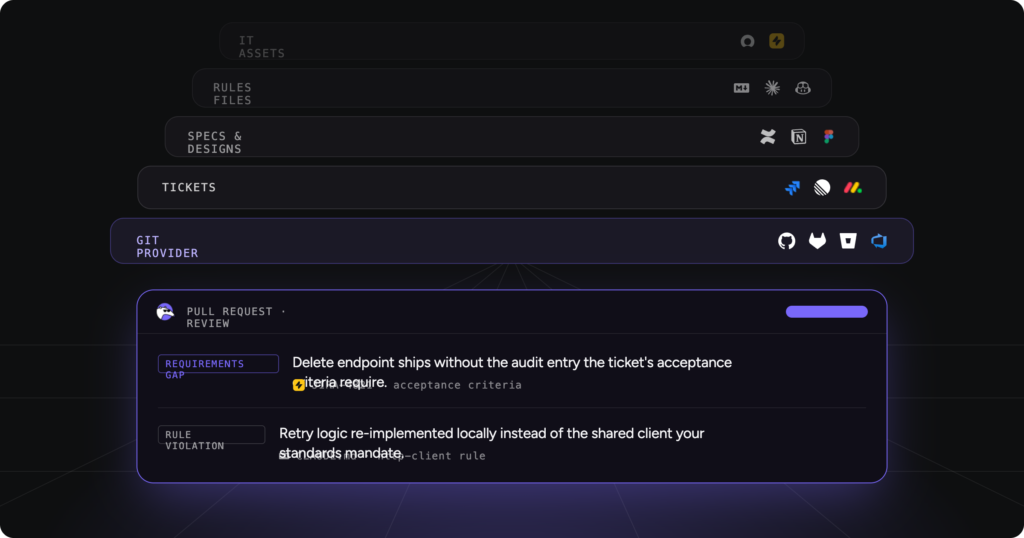
AI code review pPlatforms like Qodo implement this model with full codebase context, analyzing dependency graphs, detecting broken access control, and classifying behavioral risk before human review begins.
The New Dominant Review Risk
Implication: Many of today’s highest-impact security failures are not obvious in diff review and are easy to miss under time pressure. |
Code Review Best Practices: 5 Structural Fixes That Scale
Traditional code review breaks in predictable ways. The fixes aren’t behavioral; you can’t solve this by asking reviewers to work harder. You need to change the workflow.
Here are the five most common breakdown patterns and how to fix them:
1. Stop Reviewing Architecture Inside Pull Requests
What breaks: Design discussions happen after code is written. Reviewers react to architectural decisions instead of validating them early. Large PRs get approved because no one wants to ask for a complete rewrite.
The fix: Require lightweight design alignment before implementation.
How to implement:
- Define which changes need design review: API changes, new services, schema modifications, cross-team dependencies
- Add a PR template field: “Design doc link (required for architectural changes)”
- Configure merge gates to block PRs that modify public APIs without design docs
Tool support: Qodo automatically detects architecture-impacting changes (API modifications, schema changes, new service dependencies) and flags PRs missing design documentation, blocking merge until the link is provided.
Result: Rework cycles drop by 40-60% because design feedback happens before implementation, not during PR review.
2. Make Pull Request Intent Explicit, Not Inferred
What breaks: PRs describe what changed, not why. Reviewers guess intent from implementation. Misalignment gets discovered late.
The fix: Enforce ticket linkage and require problem statements in PR descriptions.
How to implement:
- Require PR descriptions to include: problem statement, expected behavior change, and edge cases handled
- Add a CI check that blocks PRs without linked tickets
- Configure your ticket system to auto-update with PR links
Tool support: Qodo enforces ticket linkage automatically and flags PRs where the code changes don’t align with the stated ticket scope, surfacing scope creep before review begins.
Result: Reviewers evaluate behavior against declared goals instead of reverse-engineering intent from code.
3. Automate Mechanical Checks Completely
What breaks: Reviewers spend time on formatting, linting, and missing tests instead of evaluating correctness and risk. When review capacity is limited, cosmetic issues such as spacing and naming conventions get flagged, while security gaps like unsafe input handling or any unbounded network accessslip through.
The fix: Move all mechanical checks into automated pre-review gates.
How to implement:
- Enforce linting, formatting, and style rules in CI (block merge on violations)
- Add static analysis for common bugs (null checks, resource leaks, deprecated APIs)
- Run security scanners (dependency vulnerabilities, hardcoded secrets)
- Require test coverage for new functions
Tool support: Qodo runs these checks with full codebase context, going beyond local linting to detect cross-repo impacts, broken contracts, and missing authentication patterns that simple static analysis misses.
Result: Human review starts from a clean baseline. Reviewer attention goes to design quality, not rule enforcement.
4. Separate Blocking Issues from Suggestions
What breaks: Review systems treat all comments equally. Low-impact suggestions delay merges as much as critical security issues. Teams either ignore all feedback or get stuck on style debates.
The fix: Label feedback priority explicitly and gate merges only on blocking issues.
How to implement:
- Adopt a comment taxonomy: BLOCKING (must fix), IMPORTANT (should fix), OPTIONAL (suggestion)
- Configure merge rules to require resolution of only BLOCKING comments
- Track PRs blocked by issue type on a dashboard
Tool support: Qodo automatically classifies findings by risk level. Security issues, broken contracts, and missing auth checks are flagged as blocking. Style suggestions and optimizations are marked as optional follow-ups.
Result: Merge velocity increases by 30-40%. Critical issues get fixed; low-priority feedback doesn’t block releases.
5. Optimize for Fast First Feedback
What breaks: Teams wait for complete, exhaustive reviews. Initial feedback arrives 2-3 days later. Context decays, which directly increasesework costs.
The fix: Bias toward fast initial response, even if incomplete.
How to implement:
- Set SLA for first review response: 4 hours for urgent PRs, 24 hours for standard
- Alert when PRs sit without reviewer activity
- Encourage partial feedback early: “I see issue X, will review architecture later.”
- Track “time to first comment” as a team metric
Tool support: Qodo provides immediate automated feedback the moment a PR is opened, flagging high-risk areas within seconds so human reviewers know where to focus first.
Result: Authors get direction while the context is fresh. Review doesn’t become a waiting game.
The Pattern That Makes Code Review Process Scalable
Each fix above moves a specific responsibility from human judgment to system-level automation:
Automation handles:
- Baseline rule enforcement
- Policy compliance checks
- Risk detection and classification
Humans focus on:
- Intent validation
- Architectural trade-offs
- Design quality
When these responsibilities mix, review slows down and becomes unreliable. When they’re separated, review becomes predictable, fast, and consistently thorough.
This separation is what makes the review scale: not by adding rules or asking reviewers to be more careful, but by making guarantees explicit, enforcing them automatically, and assigning ownership clearly.
Next, let’s go through how a scalable code review process works..
How a Scalable Code Review Process Works
A scalable code review process is a sequence of automated checks and decisions (taken by engineers), each with a clearly defined role. Scalability comes from assigning routine enforcement to automation and reserving human review for judgment and architecture.
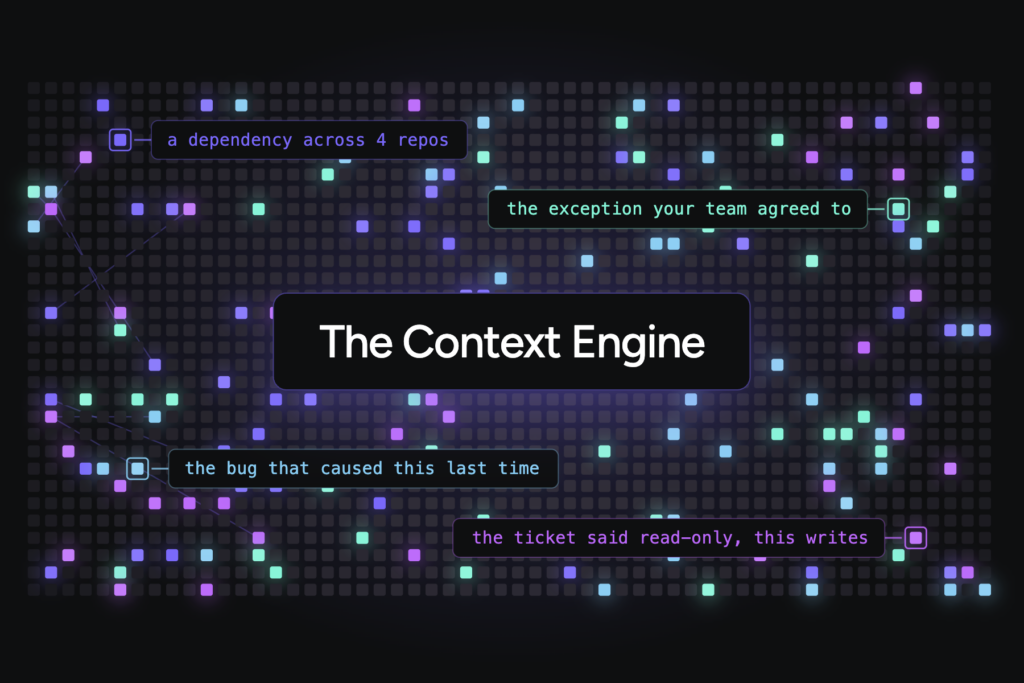
This only works with context-aware automation. Risk scoring, cross-repo impact detection, and policy enforcement require understanding how a change behaves across the entire codebase, not just the local diff. Without that context, automation produces noise instead of reducing risk.
Analyst research supports this requirement. The 2025 Gartner Critical Capabilities for AI Code Assistance report identifies codebase understanding as essential for tools on the code review critical path. In that evaluation, Qodo ranked highest in Codebase Understanding.
The workflow below shows how this separation enables review to scale reliably.
Stage 1: Pre-Review Automation
Anything that does not require judgment should be enforced before a human sees the PR.
Automated gates should block review on:
- Missing or failing tests
- Linting and static analysis violations
- Ownership or policy breaches
- Baseline security checks
If a change fails here, it should never enter the review queue. Human reviewers should not act as the first line of defense.
Stage 2: Risk Assessment and Change Classification
Not all changes deserve equal scrutiny. Treating them that way guarantees review fatigue and missed risk. Before the review begins, the system should classify:
- Behavioral vs. internal-only changes
- API, schema, or contract modifications
- Security-sensitive code paths
- Cross-repo or dependency impact
This classification determines who reviews the change and how deeply. Review effort scales with risk, not PR volume.
Stage 3: Human Review Focused on Judgment
Once automation has enforced rules and surfaced risk, human review becomes high-leverage.
At this stage, reviewers focus on:
- Intent vs. implementation alignment
- Architectural trade-offs
- Long-term maintainability
- Correctness of behavior under real-world usage
Feedback should be explicitly prioritized (blocking vs. optional), and reviewers should be routed based on context, not availability.
Stage 4: Auditability, Exceptions, and Control
At scale, approvals must be meaningful and traceable.
A scalable system requires:
- Clear semantics for approval and merge states
- Explicit, logged overrides with rationale
- Structured review history for audits and compliance
- Automated enforcement of regulatory or internal controls
Automation does not remove accountability. It makes accountability visible.
Where Automation Belongs in the Review Lifecycle
Automation improves review only when it reduces cognitive load. Its role changes by stage:
- Before a PR exists: Editor-level checks (within the IDE) catch issues early, such as validation gaps, unsafe APIs, and formatting violations, eliminating major load from review cycles.
- In CI: Rule-based enforcement blocks unsafe changes automatically, ensuring human review starts from a clean baseline.
- Inside the PR: Context-aware analysis summarizes:
- What behavior changed
- Which systems are affected
- Where risk is concentrated.
Now that we are clear about what a scalable code review process means, we will walk through a step-by-step process to upgrade your code review process.
Step-by-Step: How to Upgrade Your Code Review Process
I’ve helped engineering teams at companies ranging from 50 to 10,000+ developers implement scalable review processes. The pattern that works: incremental changes with clear ownership at each step.
Upgrading code review works best when done systematically. Each step below addresses a specific failure mode I’ve observed repeatedly across organizations. Teams can implement these independently, but they’re most effective in order.
The Implementation Checklist
| Step | What to Implement | Who Owns It |
| 1. Measure current behavior | Track time to first review, time to merge, reopened PRs, and post-merge fixes | Platform team, engineering leadership |
| 2. Define what approval means | Document what an approval certifies: correctness, tests, policy compliance, architectural alignment | Engineering leadership, tech leads |
| 3. Separate blocking from optional | Label which findings must block merge and which are suggestions | Tech leads, reviewers |
| 4. Automate baseline enforcement | Move tests, linting, ownership rules, and security checks into CI—block merge on violations | Platform/DevOps team |
| 5. Move design decisions out of PRs | Require design alignment before implementation for architecture-impacting changes | Architecture group, tech leads |
| 6. Make reviewer responsibility explicit | Treat approvals as ownership of correctness and maintainability, not just “looks okay.” | Engineering leadership |
| 7. Optimize for fast first feedback | Set SLA for first review response and escalate when no one responds | Engineering leadership |
| 8. Use escaped issues to improve | Trace production incidents back to PRs and add missing checks or guarantees | Platform, reliability, and security teams |
Why this order matters: In my experience, teams that jump straight to automation (step 4) without defining approval meaning (step 2) end up with automated checks that get bypassed under pressure. The sequence builds accountability first, then automates it.
After this checklist is in place, review failures stop being vague or personal. If a PR stalls, the cause is a missing owner or routing rule. If regressions escape, the cause is a missing check or unenforced guarantee. Each problem maps back to a specific step in the process.
This also makes review quality observable. When Monday.com implemented this approach, they saw measurable improvements: time to first review dropped by 30-40%, and developers saved approximately one hour per pull request while preventing 800+ potential issues monthly.
Repeatable work moves out of human review. Tests, linting, ownership validation, and security checks either pass automatically or block the change before review starts. Reviewers focus on intent, system impact, and design trade-offs—the work that requires human judgment.
This is how code review scales: not by adding rules or asking reviewers to be more careful, but by making guarantees explicit, enforcing them automatically, and assigning ownership clearly.
What This Code Review System Requires to Work
Once you’ve defined your review process around explicit guarantees, the remaining challenge is execution at organizational scale. After working with enterprise teams managing hundreds of repositories and thousands of developers, I’ve identified three core features that separate systems that scale from those that don’t.
These features are difficult to build and maintain independently in every repository. That’s why centralization—either through internal platform engineering or external platforms—becomes necessary.
1. Full Codebase Context
The system must understand changes beyond the local diff. Here’s what that means in practice:
Cross-repo dependencies: When a shared authentication library changes, which services consume it? In a typical enterprise with 100+ microservices, manual tracking breaks down immediately.
API and contract changes: Are public interfaces or schemas affected? A field type change in a shared proto file can break 20+ downstream consumers. Without automated dependency analysis, these breaks surface in production, not for review.
Historical patterns: How has this area evolved? What issues occurred here before? At one Fortune 100 retailer I worked with, their most frequent incidents traced back to repeated patterns in authentication logic—issues that could have been caught if the review system understood PR history.
Downstream impact: Which teams or systems are affected by this change? When monday.com adopted context-aware review, they discovered that 17% of PRs contained high-severity issues (rated 9-10 on their internal scale) that would have affected downstream service issues that weren’t obvious from diff inspection alone.
Without this context, reviewers operate blindly.
The 2025 Gartner Critical Capabilities for AI Code Assistants report specifically identified codebase understanding as a critical capability for review systems, ranking Qodo #1 in this dimension for exactly this reason.
2. Pre-Review Enforcement Gates
Baseline requirements must run automatically before human review begins. I’ve seen teams waste thousands of engineering hours annually on manual checks that should be automated.
Test presence and coverage: New code has corresponding tests. Simple, but in practice, teams that don’t enforce this automatically see test coverage decay by 10-15% per quarter.
Security scanning: Dependency vulnerabilities, hardcoded secrets, and common vulnerability patterns get caught before a human looks at the code. With broken access control affecting 151,000+ repositories in 2025 (172% YoY growth), automated security scanning is no longer optional.
Policy compliance: Ownership rules, architectural boundaries, and compliance requirements are validated. At regulated enterprises I’ve worked with, manual policy enforcement led to audit failures. Automated enforcement eliminated those gaps entirely.
Ticket traceability: Every change links to a work item or design doc. This seems basic, but organizations without automated enforcement see 30-40% of PRs ship without proper documentation, making post-mortems and audits significantly harder.
The impact of automation here is measurable. According to Qodo’s 2025 State of Code Quality report (609 developers surveyed):
- Teams using AI review saw quality improve from 55% to 81% (+26 points) even while shipping faster
- 80% of PRs required no human review comments when automated checks were comprehensive
- Developers reported 70% reduction in “context miss” struggles—cases where they couldn’t understand changes without deep investigation
3. Centralized Audit and Policy Management
At enterprise scale, review decisions need to be traceable and consistent across teams.
Structured approval records: “LGTM” comments aren’t enough. Approvals must explicitly state what was validated, correctness, security, performance, and architectural alignment.
Exception tracking: When rules get bypassed (emergency hotfixes, deadline pressure), the system must record who approved the exception, why, and what follow-up work is required. In my experience, untracked exceptions become technical debt that accumulates silently until it causes incidents.
Cross-team consistency: The same violation should be caught in every repository. I’ve seen organizations where one team rigorously enforces auth checks while another team ships with auth gaps regularly—purely because enforcement was repo-local and inconsistent.
Queryable history: When an incident occurs, you need to answer: “Which PRs touched this code? Who approved them? What checks ran?” Without structured records, post-mortems become archaeological digs through PR comments.
A Global Fortune 100 retailer implemented centralized audit trails as part of their AI code review rollout. Within 6 months, they saved 450,000 developer hours annually, onboarded 2,500+ repositories, and achieved consistent policy enforcement across 5,000+ active developers. Their compliance team could finally answer audit questions in minutes instead of weeks.
Where AI Code Review Platforms Like Qodo Fit
The review model described here requires infrastructure. It needs cross-repo awareness, policy enforcement, ticket linkage, and risk analysis built directly into the pull request workflow.
Some teams build this internally. I’ve worked with platform engineering teams at large enterprises who dedicated 2-3 engineers full-time to building and maintaining internal review tooling. That works if you have the resources and expertise.
Most teams don’t. They need a platform that already implements this model without reinventing the wheel, which is where solutions like Qodo become relevant.
What Qodo Actually Does
Qodo is an AI code review platform built specifically for this infrastructure layer. It doesn’t autocomplete code. It evaluates changes with complete system context, checks organization-wide standards, and enforces merge conditions.
Here’s how it implements the model:
Full codebase indexing: Qodo indexes your entire codebase across repositories—understanding dependency graphs, API consumers, and historical patterns. When you open a PR, it analyzes the change against the complete system, not just the local diff.
Pre-review automation: Baseline checks run automatically: test coverage verification, security vulnerability detection, policy compliance validation, ticket linkage enforcement. Issues block merge before human review begins.
Behavioral risk classification: Qodo classifies PRs by actual risk, not just size. A 10-line change that modifies authentication logic gets flagged as high-risk. A 500-line documentation update doesn’t.
Context-aware detection: It catches issues traditional static analysis misses—broken access control patterns, missing authentication checks in generated code, cross-repo breaking changes. According to Gartner’s 2025 Critical Capabilities report, this is where Qodo ranked #1 among AI code assistants.
Integration with existing workflows: Works with GitHub, GitLab, Bitbucket, Jira, Azure DevOps, and CI/CD pipelines. Review feedback appears directly in PRs where developers already work.
As Itamar Friedman, Qodo’s CEO and co-founder, explains:
Code review is a harder technical challenge than code generation. Expectations are higher because it sits directly on the SDLC critical path—when it fails, teams lose trust immediately. That’s why we built Qodo specifically for review, not generation. The problem requires deeper engineering, stronger guarantees, and tighter workflow integration.”
Real-World Implementation: Monday.com
Monday.com, with 500+ developers maintaining a complex microservices architecture, implemented Qodo as their review infrastructure layer. The results were measurable:
800+ potential issues prevented monthly: Automated detection caught security vulnerabilities, broken contracts, and architectural drift before merge.
~1 hour saved per pull request: Developers spent less time on mechanical review and more time on design evaluation.
Consistent enforcement across teams: The same standards applied to every PR, regardless of which team or repository. No more inconsistent enforcement based on reviewer availability.
As Liran Brimer, Senior Tech Lead at Monday.com, described it:
“By incorporating our org-specific requirements, Qodo acts as an intelligent reviewer that captures institutional knowledge and ensures consistency across our entire engineering organization. This contextual awareness means it becomes more valuable over time, adapting to our specific coding standards and patterns rather than applying generic rules.”
The security implications were especially notable. Qodo flagged a case where environment variables were mistakenly exposed through a public API an issue that could have slipped past manual review. “The security issue Qodo caught early on showed us we had gaps in our manual review process,” Brimer says. “Since then, Qodo has become a reliable part of our workflow.”
How Qodo Fits Your Stack
Integration points:
- Version control: GitHub, GitLab, Bitbucket
- Ticketing: Jira, Azure DevOps, Linear
- CI/CD: Jenkins, GitHub Actions, GitLab CI, CircleCI
- Communication: Slack, Microsoft Teams
Deployment options:
- SaaS: Managed by Qodo, fastest to deploy
- Private VPC: Runs in your cloud, you control the network
- On-premises: Air-gapped deployment for regulated environments
- Zero data retention: Option to ensure no code persists in Qodo’s systems
Coverage:
- Multiple programming languages
- Monorepos and multi-repo architectures
- Microservices and shared libraries
- Legacy codebases and greenfield projects
Human review stays central. Qodo handles repetition, enforcement, and cross-repo reasoning—the parts that don’t scale manually, while humans focus on intent, architecture, and trade-offs.
Conclusion: Code Review as Infrastructure
Code review doesn’t have to be the bottleneck that limits AI-accelerated development. When you treat it as infrastructure automating enforcement, detecting risk with full codebase context, and preserving human judgment for architecture review scales with your team instead of against it.
The path forward is systematic: implement the 5 structural fixes, follow the 8-step checklist, and build or adopt infrastructure that provides full codebase context, pre-review gates, and centralized policy management. Whether you build internally or adopt a platform like Qodo, the pattern is the same.
Your team is already shipping 10x more code than two years ago. The only question is whether you’ll scale review intentionally or watch quality erode while review queues grow.
FAQ
1. What are the essential steps in a code review process?
A scalable code review process consists of four stages:
- Pre-review automation – enforce tests, linting, ownership, and baseline security checks before human review.
- Risk classification – identify behavioral changes, API/schema impact, and security-sensitive paths.
- Human review – focus on intent, architecture, and trade-offs, not rule enforcement.
- Auditability and approval – approvals are explicit, traceable, and meaningful.
Skipping or merging these stages is what causes review to break at scale.
2. How do you automate the code review process without sacrificing quality?
Automation improves quality when it replaces routine enforcement, not human judgment.
In practice:
- Reviews run automatically on PR open, update, or when marked ready
- Baseline violations block review before a human is involved
- Findings are prioritized and grouped to reduce noise
- Feedback stays synced as new commits are pushed
Tools like Qodo do this by running context-aware reviews automatically via configuration, while keeping human reviewers responsible for final decisions.
3. What are code review process best practices for enterprise teams?
Enterprise teams should define review expectations and enforce them consistently through automation rather than relying on individual reviewers. With Qodo, many of these best practices can be enforced through configuration in a pr_agent.toml file, including:
- When code reviews run (automatic or manual)
- Which pull requests, repositories, branches, files, or folders are reviewed
- Which pull requests are ignored to reduce noise
- How feedback is presented (summary vs inline)
- Severity thresholds and limits on surfaced findings
By encoding these rules in configuration, Qodo helps ensure consistent review behavior across teams and repositories. Best practices are enforced by the system configuration rather than left to reviewer convention or memory.
4. Which code review tools help enforce quality checks automatically?
Effective tools integrate directly into PR workflows and CI pipelines to:
- Run reviews automatically or on demand
- Block merges on critical findings
- Enforce ownership, policy, and security rules
- Keep feedback aligned with the latest diff
AI code review platforms like Qodo extend this by analyzing the full codebase context instead of relying on file-local heuristics.
5. How do AI-based code review platforms enforce compliance and standards checks?
They enforce compliance through configuration, not reviewer memory.
Using a configuration file (for example, pr_agent.toml), teams define:
- When reviews run (automatic vs manual)
- Which PRs, files, or branches are included or excluded
- Severity thresholds for surfaced findings
- Which issues block merges versus remain advisory
And that’s it. Qodo now ensures standards are enforced consistently across repositories and teams.
6. How well do enterprise AI code review tools integrate with GitHub Actions pipelines and enforce security checks at scale?
With Qodo, teams add a GitHub Action that runs qodo –ci as part of the pull request workflow. Here’s how that happens:
- The action runs when a pull request is opened and whenever new commits are pushed.
- Each run analyzes the current diff so results never go stale.
- If high-severity security or policy violations are found, the CI job fails and the pull request cannot be merged.
- Review behavior is defined in configuration (agent.toml with overrides), allowing shared defaults across the org with repo-level control.
Because enforcement happens in CI, checks apply consistently across repositories and scale with pull request volume without depending on individual reviewers.
7. What makes a code review process scalable beyond small teams?
Scalability comes from:
- Removing humans from baseline enforcement
- Making risk explicit before review
- Reducing reviewer cognitive load with prioritized summaries
- Ensuring approvals have a consistent, enforced meaning
Processes that rely on senior engineers “catching things” do not scale.
8. Can automated code review platforms detect broken access control and security issues?
Yes, when they analyze behavior and context, not just patterns.
Detecting broken access control requires:
- Understanding authentication boundaries
- Tracking permission usage across files and services
- Analyzing how changes affect real execution paths
Context-aware analysis is required; simple static rules are insufficient.
9. How do code review automation tools handle documentation and standards enforcement?
Tools like Qodo enforce documentation and standards by evaluating them as part of the code review checks. Documentation requirements and engineering standards are defined as rules. When a pull request is reviewed, Qodo evaluates those rules against the actual change.
If the change modifies APIs, schemas, or other sensitive areas, stricter requirements apply automatically. If required documentation or standards are missing, the check fails, and the pull request cannot be merged. For some cases, such as release notes, Qodo can generate the required documentation through agents instead of relying on manual author input.
10. What infrastructure is required for enterprise-grade code review automation?
Enterprise-grade code review automation requires a defined review infrastructure. This includes:
- CI/CD pipelines with required, blocking checks on pull requests.
- Automated PR review integrated directly with version control systems.
- Centralized configuration for review rules, standards, and enforcement behavior.
- Codebase-aware analysis across repositories to detect dependencies and impact.
- Audit logs for approvals, violations, overrides, and exceptions.
Platforms like Qodo provide this infrastructure out of the box, combining rule enforcement, agent-based automation, and codebase-aware analysis directly into the pull request workflow.
About the author