Qodo Integrations: Turning Your SDLC Into Review Context

Ask an engineering team about integrations and the question sounds like a checklist. Does it work with GitHub? Does it read Jira? Is there a VS Code plugin? Fair questions. But they miss what integrations actually do for code review.
Every system Qodo connects to is a source of context. The Git provider carries your patterns, dependencies, and PR history. The ticketing system carries intent. The spec and design tools carry what the change was supposed to be. The rules files carry your standards. Connect those, and review stops asking “is this code correct?” and starts asking “is this code what we actually meant to ship?”
That’s the real value. The more Qodo can see, the less a reviewer has to reconstruct by hand, and the more precise every finding gets. Here’s what Qodo integrates with, and what each connection is actually worth.
Git providers: where review runs
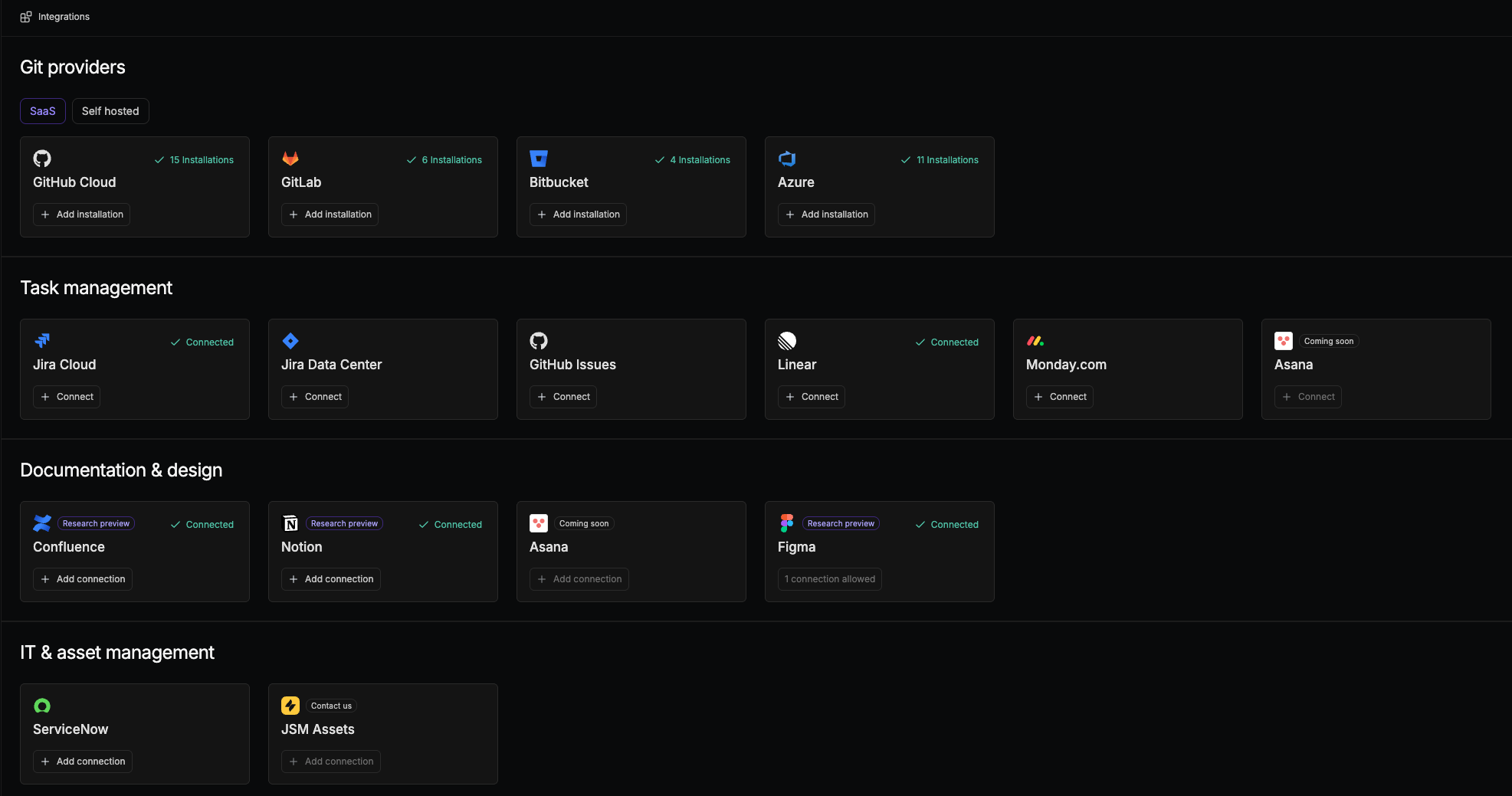
Review lives on the pull request, so the Git provider is the one integration nothing else works without. Qodo installs on every major provider: GitHub (Cloud, Enterprise Server, and Cloud Enterprise), GitLab (Cloud and Self-Managed), Bitbucket (Cloud and Data Center), and Azure DevOps, with Gerrit available on Enterprise plans.
Connecting the Git provider and choosing which repositories Qodo reviews are two separate steps, so you decide how much of your code Qodo sees, from a single repo to the whole organization. Whatever you connect, Qodo’s review agents read the codebase itself: existing patterns, dependencies, and review behavior across PR history. That’s a larger source of context than tickets or specs alone, and it’s why review that understands your codebase catches architectural drift a diff-level tool never sees.
Ticketing and requirements: where intent comes from
Connected to your ticketing system, Qodo reviews against intent. Requirement gaps surface as findings, with the ticket linked as evidence.
Qodo pulls context from Jira (Cloud and Data Center), Linear, Azure Boards, Monday.com, and issues in GitHub, GitLab, and Bitbucket. From each, it reads the fields that describe what the work was supposed to be: title, description, custom fields, subtasks, acceptance criteria, image attachments, and labels, feeding them into the review. The mechanics stay out of the developer’s way: a pull request declares its ticket with a direct link in the description or a branch name that matches the ticket pattern. Branch detection is always on and case-insensitive. No workflow changes.
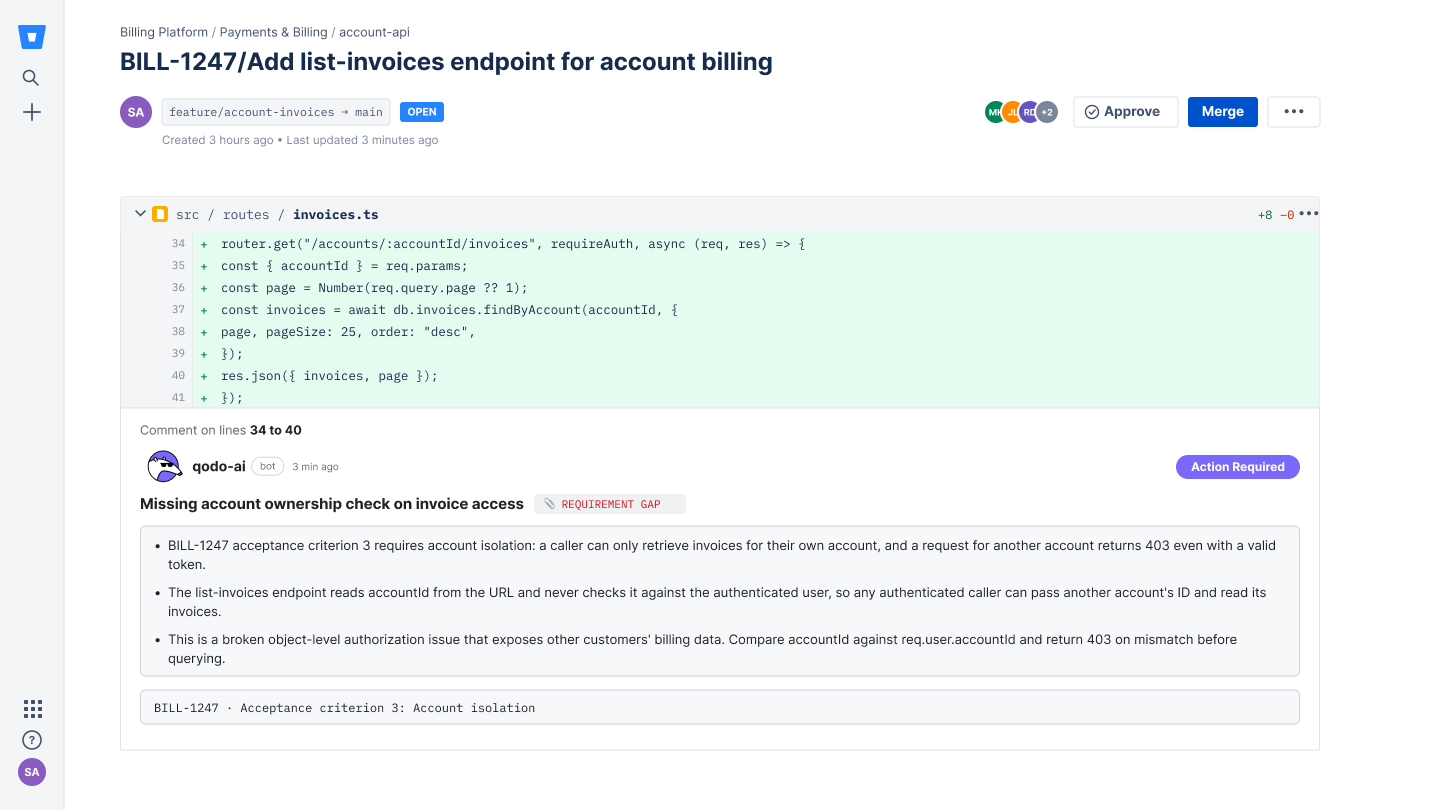
Users should keep in mind that thin tickets produce thin context. But in practice, requirement-gap findings tend to push teams toward better tickets, because product owners engage with review once their input visibly reaches the code.
Specs and designs: the rest of the requirement
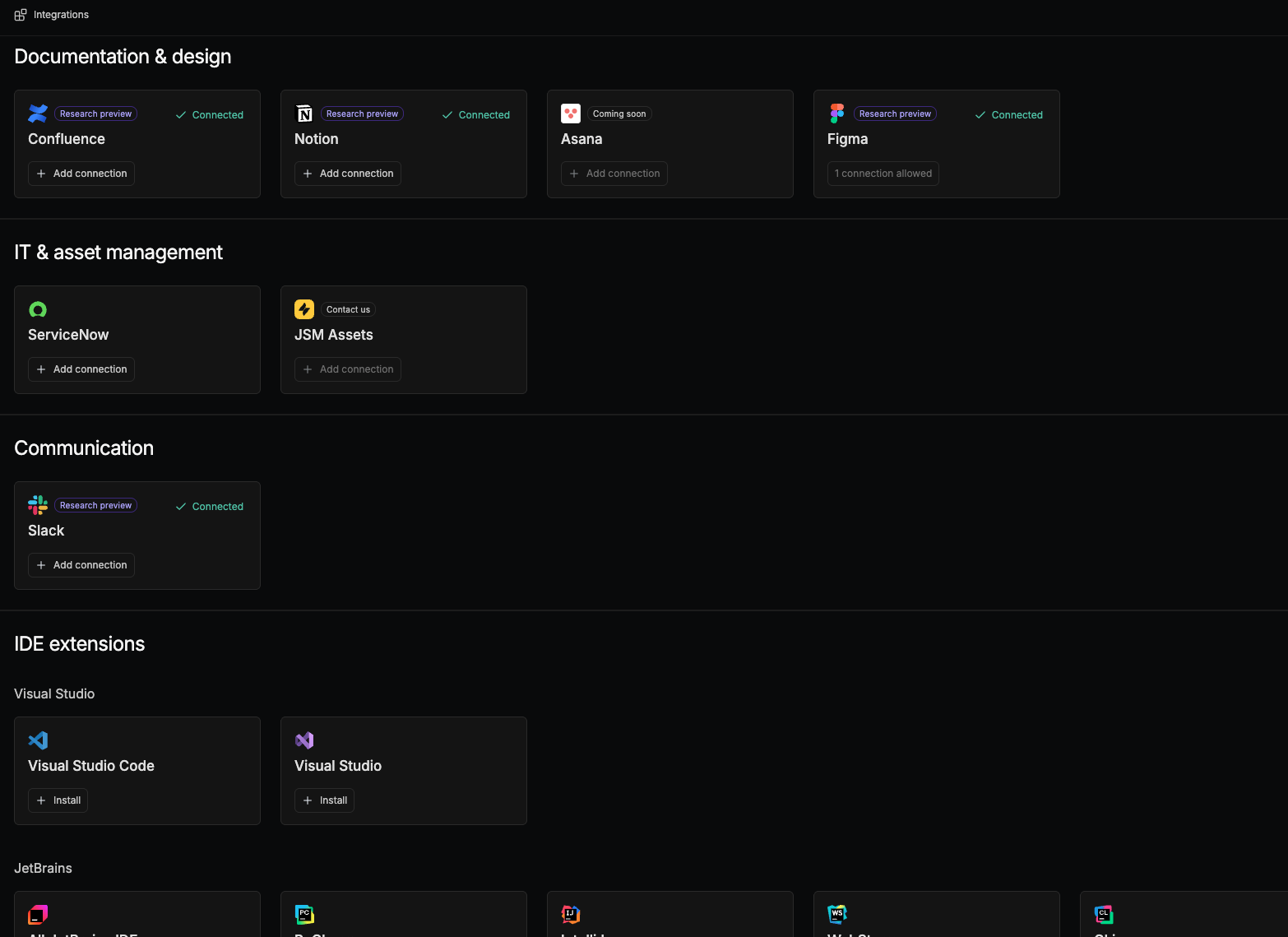
Requirements don’t only live in tickets. Qodo pulls specification documents and design files into the same review. Include a Confluence or Notion URL and a Figma URL in the pull request, and the review checks the change against the spec and the design, not just the code. Each review uses up to one specification document and one design file, so one ticket, one spec, and one design is the full context set.
That’s how review feedback surfaces a requirement gap or a UX deviation instead of only a code-level issue. The design said one thing, the implementation did another, and the finding says so with the source linked.
IT and asset management: context for governance and operational risk
Some review context lives outside the codebase entirely, in the systems that track configuration items and assets. Qodo connects to ServiceNow and Jira Service Management Assets, so reviews can factor in configuration-item and asset context alongside the code change. For enterprise teams, that ties a change back to the operational systems it affects, which matters most where governance and operational risk are part of the review, not an afterthought.
IDEs and coding agents: where fixes happen
Findings shouldn’t wait at the PR gate. In a stack where Cursor, Claude Code, and Copilot generate a growing share of the code, review that only lives on the pull request arrives too late. It catches the issue after the agent already wrote it.
Qodo closes that gap two ways. There’s an IDE plugin for VS Code, JetBrains, and Visual Studio for local, pre-PR review. And there are Agent Skills, open-source instruction sets that follow the open Agent Skills standard and work with Claude Code, Cursor, Windsurf, Cline, OpenAI Codex, and any compliant agent. Two skills do the heavy lifting: qodo-get-rules fetches your repository’s coding rules, with severity levels, into the agent’s context before it writes code, and qodo-pr-resolver pulls open review findings and resolves them locally, across GitHub, GitLab, Bitbucket, and Azure DevOps. Resolved items show struck through in the pull request with a full audit trail.
Run qodo-get-rules before generation, not just qodo-pr-resolver after, and the agent writes against your standards from the start. That turns the PR gate into confirmation instead of correction.
Rules and standards files: your MD files are the integration
Most teams already wrote their standards. They’re just scattered: a CLAUDE.md here, a copilot-instructions file there, best-practices markdown in half the repositories, and the rest in senior engineers’ heads. Every AI coding tool wants its own file, and the security architect who owns the standard has no way into any of them.
Qodo reads those existing files (CLAUDE.md, agents.md, copilot instructions, and similar) and consolidates them into one governed rules portal, so review enforces what your team already believes instead of generic best practices. Rules scope organization-wide, per group, per repository, per file, or per folder, which matters most in monorepos where one repository holds many standards domains. The Rule Miner generates suggestions from your PR history, and a human approves every suggestion before it activates. Connected repositories get cross-repository review, running impact analysis across your defined dependency map.
LLM infrastructure: what review runs on
For most teams this layer is invisible. Qodo runs its own continuously benchmarked model pool, and that’s that. For enterprises with AI gateways, model approval chains, or their own model contracts, teams can bring their own keys, route traffic through their AI gateway with custom authentication headers, and restrict which model families run.
The pattern underneath all of it
Each integration is a place where review touches your SDLC, and each one adds context that makes the next finding sharper. Git carries the codebase. Ticketing and specs carry intent. IT and asset systems carry operational context. IDEs and agents carry the fix. Rules files carry the standard. LLM infrastructure runs it.
None of this asks your team to work somewhere new. Qodo enriches the PR, IDE, and ticket workflows you already have. That’s the point: better reviews, not more workflow, with governance that holds without slowing developers down.
Want to see review running with your exact stack? Book a demo, or start free and connect your Git provider in minutes.