How HiBob Scales Engineering Velocity Without Sacrificing Quality

HiBob is an all-in-one HR platform that manages everything from payroll and hiring to time off and performance reviews. With 250,000 monthly active users on mobile and an even larger desktop presence, the engineering team of 200+ developers is tasked with maintaining a system where every update carries significant weight. AWS provides the compute, storage, and database infrastructure that powers HiBob’s global service, supporting hundreds of thousands of users across regions with the reliability an HR system of record demands. The same AWS foundation extends to the review layer: Qodo runs on Amazon Bedrock, drawing on its foundation models to power the code analysis behind every PR.
We spoke with Ofer Morag Brin, Head of Mobile at HiBob, about the hidden costs of AI-generated code and why Qodo became their mandatory AI code reviewer.
“Since we’re using Qodo, our confidence definitely got a lot better because we know that Qodo is there, that Qodo is able to catch every small issue, that it sees the bigger picture, the connections between the different things that code changes introduce.”
The AI productivity tax
HiBob was an early adopter of AI, using tools like Cursor, Claude, and Notion to turn PRDs into working code. As AI became part of the development lifecycle, output increased quickly, and features moved faster from idea to implementation. But as more code was generated, pull requests began to pile up and the strain shifted to a different part of the process. Manual review and automated tests still caught a lot, but they couldn’t keep up with the growing volume. The system wasn’t breaking, but it was slowing down in a new place. The bottleneck had moved from writing code to reviewing it.
Quality was never optional
High code quality has always been a non-negotiable priority at HiBob. Even as development velocity accelerated, expectations for quality didn’t change. However, the effort required to maintain that standard began to exceed the team’s bandwidth. For the mobile team, the stakes of a quality lapse are uniquely high. Unlike web or backend environments, there is no immediate rollback; a bug can be trapped in an app store for days while waiting on a fix to be approved.
For HiBob, quality is the foundation of customer trust, and the goal was to find a way to maintain these standards without forcing the team to move at a crawl.
Qodo became a key part of how HiBob manages this shift.
Qodo: HiBob’s Governance Layer
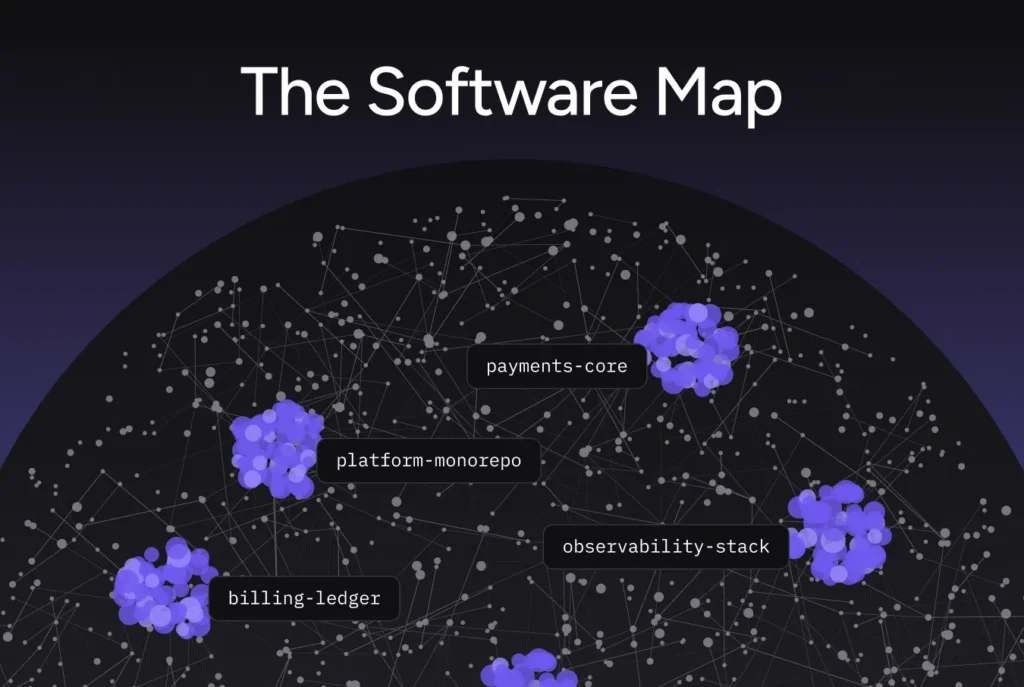
The team brought in Qodo as their governance layer and to handle the part of the review that had stopped scaling, giving the team more confidence when making significant changes. Where a human reviewer can hold a few files in their head at once, a Qodo review reads every code change against the full codebase, PR history, rules and business requirements. It catches issues that surface only when you understand how a change ripples through the rest of the system.
For engineering leaders like Ofer, that broader picture is what makes the difference.
“Being a reviewer, you’re not the person who wrote the code. It’s challenging to understand how a change affects other files or other flows. Qodo connects the dots in a way that for us would take a lot more time and a lot more focus.”
Qodo also fits how the team already works, enforcing HiBob’s own rules and best practices. When rules are updated, Qodo picks up the changes automatically and applies them to the next review. The standards the team has been writing down keep getting enforced without a separate maintenance loop.
“Qodo just works. It automatically tracks the changes of rules and takes them into account when reviewing a new PR. So we don’t need to do anything. And the most important thing is that we can trust it.”
The Turning Point
Trust in any reviewer, human or AI, is built one catch at a time. For HiBob, Qodo became a critical part of the SDLC and their governing layer after a critical bug exposed the limits of traditional review.
A change shipped broke one of the app’s most-used flows. Although the team identified the issue quickly and submitted a fix, they were forced to wait for app store approval and the bug remained live for ten days.
When the team reviewed the original pull request that introduced the bug, they discovered that Qodo had actually identified the error before the code was ever shipped. At the time, however, the human reviewers had overlooked the feedback.
“This was a turning point. We realized we needed to do things differently. From that moment on we became a big advocate of Qodo.”
The New Standard for Review
To ensure that AI-driven insights are never overlooked again, the team moved from using Qodo as an optional tool to making it a mandatory requirement for every developer.
Qodo is now codified into HiBob’s SDLC, making it a mandatory requirement for every review through a “double-check” system that balances automation with human accountability.
HiBob configured their process so that the PR author must explicitly check a box confirming they have reviewed and addressed Qodo’s comments. Only after this acknowledgement is a second human reviewer assigned to the PR and can be merged.
Engineers consume Qodo’s review wherever fits their workflow, in GitHub directly, or with review workflows in the IDE while their coding. Even when developers use AI to generate the initial code, Qodo acts as a separate, objective persona to audit the work. By delegating the detailed verification to an AI teammate that understands the full context of the project, HiBob has removed the review bottleneck while strengthening their 99% crash-free standard.
“Qodo is your AI teammate. Before Qodo, you were the only one in the details of every PR. With Qodo, you have a counterpart that knows all the context and is able to back you.”
About the author