You’re Not a 10x Developer. You’re Just Typing Less.
Summary
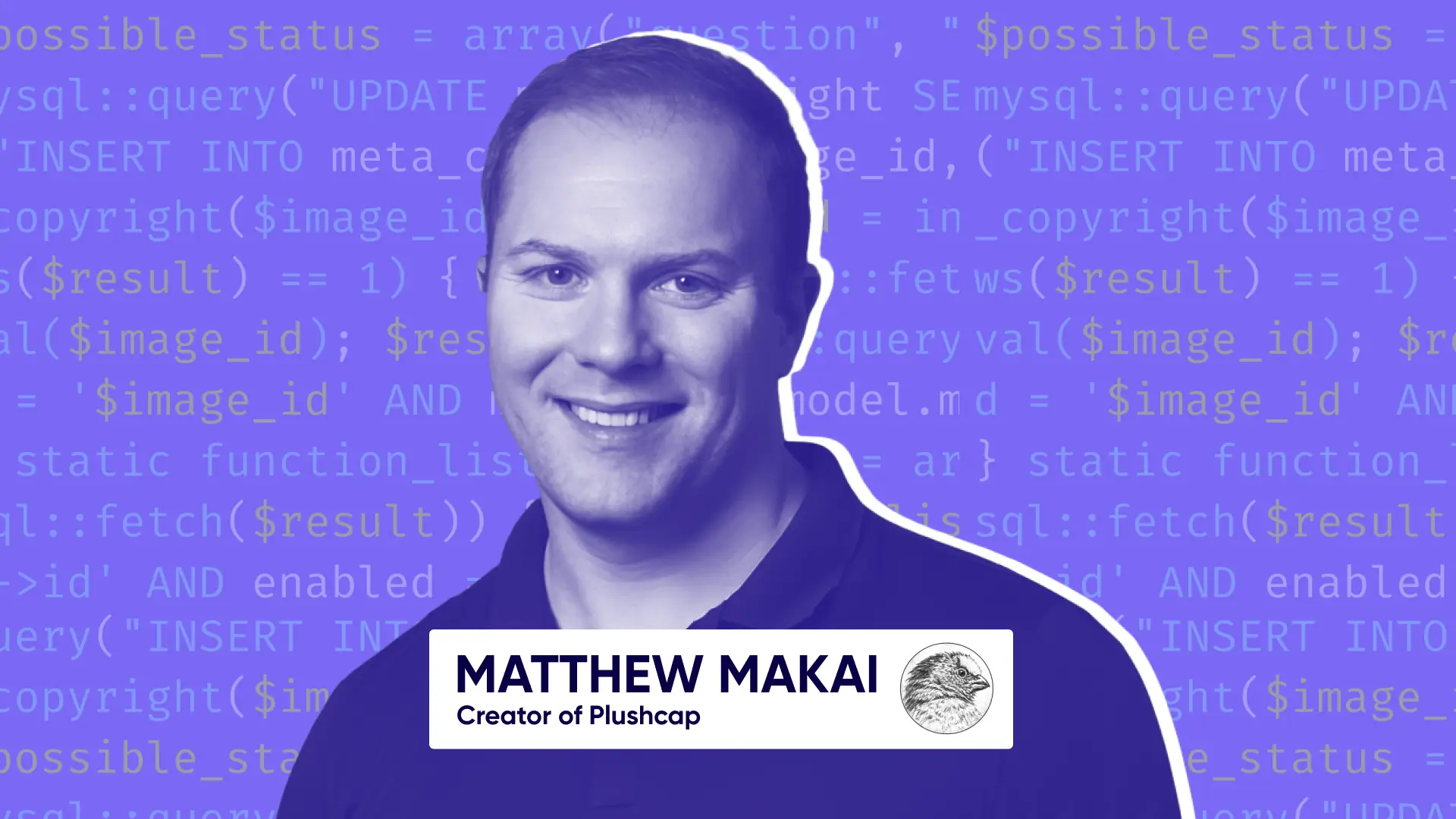
Explore the intersection of software craftsmanship and artificial intelligence with Founder of Plushcap and Creator of Full Stack Python, Matthew Makai. This episode examines the reality of using agentic tools in production and why maintaining your architectural foundation is a critical defense against technical debt. Learn how to stay ahead of market trends while preserving the expertise that makes a great engineer.
this episode’s guest

Matt Makai is a 20-year software veteran, creator of Full Stack Python, and founder of Plushcap, a developer intelligence platform. He scaled developer content engines at Twilio, LaunchDarkly, and DigitalOcean and now bets on the future of developer tooling intelligence.
Key takeaways
- The human in the loop still matters. Agentic tools amplify your architecture, good or bad, so engineering judgment doesn’t go away
- Adding a review step to your AI coding workflow (like running codex review alongside Claude Code) can dramatically reduce bugs reaching production
- Essential complexity doesn’t disappear with AI. Understanding what you’re building remains the developer’s job
- Teams with strong technical foundations before AI tools are best positioned to benefit from them without the downsides
- Skepticism is a skill — a lot of the doom and hype around AI replacing developers is marketing, not signal
- Qodo’s context-aware code review with rules as guardrails is how engineering teams turn AI productivity into production-ready quality
Chapters
- Tracking trends before they peak
- The reality of human participation
- Building a tandem review system
- Navigating complexity in requirements
- The evolution of engineering standards
- Future-proofing your career
Transcript
[00:00:00] Matthew: I’ll give you a really good example of something that I put in place just in the last two, three weeks, which has dramatically reduced the number of bugs that I’m finding in production.
[00:00:08] Itamar: Welcome to Agentic Review, the podcast where we explore what good code really means in the age of AI software development.
[00:00:17] Nnenna: I’m Nnenna Ndukwe, Developer Relations Lead.
[00:00:20] Itamar: And I’m Itamar Friedman, the cofounder and CEO of Qodo. Every episode, we sit down with engineering leaders and AI pioneers to talk about governance, accountability, and what it really takes to scale engineering velocity with AI.
[00:00:35] Nnenna: These days, writing code is easy.
[00:00:38] Itamar: But delivering trustworthy code, that’s harder.
[00:00:42] Nnenna: So let’s get into it.
[00:00:48] Itamar: Welcome to the Agentic Review, the podcast where we explore what good code really means in the age of AI software development. I’m Itamar Friedman, CEO and cofounder of Qodo.
[00:00:59] Nnenna: And I’m Nnenna Ndukwe, Developer Relations Lead. In every episode, we sit down with engineering leaders and AI pioneers to talk about governance and accountability and what it really means to scale engineering velocity with AI.
[00:01:14] Itamar: And today, we’re joined by Matt Makai, a software developer and educator who built Full Stack Python into one of the most read Python learning resources on the internet, scaled Twilio’s developer content engine to over 5,000 blog posts, and led developer relations at AssemblyAI, LaunchDarkly, and DigitalOcean.
[00:01:34] Nnenna: Matt has spent decades at the intersection of developer education, community, and Python systems. And recently, since March 2026, he has gone all in on Plushcap, his own developer intelligence platform tracking trends across AI coding tools, multi-agent systems, and the broader developer tooling landscape.
[00:01:54] Itamar: So without further ado, Matt, welcome to the show.
[00:01:57] Matthew: Thank you very much. That was quite the generous introduction. When I get asked at parties, I’m usually just they’re like, what do you do? I’m like, I’m a software developer. And then people either get really excited by that or not. So that’s my grounding for all of this.
[00:02:10] Itamar: Yeah. So we’d love to hear more about yourself and maybe to give it a little bit of framing. You just left DigitalOcean on March 26 to go full time on Plushcap tracking those 500 AI coding tools. Like, in your own words, tell us more about Plushcap, and what exactly are you solving, and why now?
[00:02:28] Matthew: Yeah. So I’ve been a software developer for decades. I was a professional software developer for over ten years and still code every single day. But even before that, before being a professional software developer, I was always always just coding. I started out in, you know, basic. A lot of folks when, you know, MS-DOS was was the thing and played a lot of, text-based MUDs growing up. And that’s kind of where I learned how to how to program, got into C++ Java, that sort of thing. So for me, everything around, developer relations, developer marketing, developer tooling, developer experience, it all comes back to being a software developer. I just want to have a great experience while I’m trying something out. I’m constantly testing new tools, different workflows, things like that. And so a lot of that has fed into my entire career either as a heads down software developer or building and leading developer relations teams or just helping companies figure out how do we attach onto some of the biggest developer trends that are coming up. So a
[00:03:23] Itamar: bit of a more about splash cap. Like, what are you trying to solve and why now?
[00:03:27] Matthew: Yeah. So, originally, when I was building out the developer content program at Twilio, I was hand tracking in a spreadsheet every blog post that was, like, coming up, that would publish metadata about it. And I’m like, this is crazy. Why am I doing this in a spreadsheet? I’m a software developer. Like, this could be a database, and this email should be automated. And so that’s essentially what kind of started this whole thing was sort of building some stuff on nights and weekends, mostly because I had the spreadsheet for work, but then I’m advising all these startups, doing dev tooling, including AssemblyAI, where I joined later. And I just found every company was kind of asking the same thing. What is our content? Whether it’s written or videos, how do we do that well? How do we measure all those things? How do we benchmark ourselves against other companies, either ones that are larger where we want to go or peer companies where we know we’re competing with them or they’re sort of in an adjacent space. So that was kind of the start of Plushcap four years ago. This is a project I worked on nights and weekends used by thousands of people. I don’t charge for it. It’s kind of just a side project., but the whole idea was that was a lot of what I needed, and then other people were asking me for that. And then more recently, a big thing that has just kind of exploded is we’ll just need to know what the trends are and measure them., I think you can go back to something just just a couple of months ago, like OpenCode. It kind of exploded out of nowhere. Now to be fair to Peter Steinberger, he was working on that for a year, before it kind of was the overnight success. The same old story. But that’s a big piece of it is there’s hundreds of OpenCode moments for a lot of companies, and they typically reach them too late. And so that’s essentially what Plushcap allows you to do as you see the data. And then through my own expertise, I can actually see where a lot of these trends are going.
[00:05:10] Nnenna: That’s amazing. I’m wondering more about those trends, though. Like, what are you seeing at Plushcap that most people maybe aren’t paying attention to yet or don’t even know is going on, really?
[00:05:21] Matthew: Yeah. So a lot of times you’ll read stuff from VCs, for example, Andreessen Horowitz, and they’ll be talking about some niche domain that they’re investing in. And you’ll hear a lot about it. Maybe in 2023, you hear about voice AI. And it seems, oh, that maybe that’s going to be a thing. But then you actually look at the data. Voice AI actually really exploded this year. The amount that companies are doing with voice AI is unbelievable. And I think that what happened was with this trend, just to take one trend, is there was a lot of investment in the area. It finally matured, and then the use cases rapidly proliferated to the point where it kind of became something that was much easier to build, much cheaper to build on. It was actually something that developers cared more about, and then companies really started to build with all these different tools. And so a lot of times, you’ll hear about trends at different stages of the maturity process. In traditional marketing, this is kind of like crossing the chasm. You got your early adopters, and then you got your chasm to the pragmatists. And you will only have a gut feel if you kind of look on X or on LinkedIn. But if you actually look at the data, you’ll see when these things are actually exploding. And the whole point is be in early just before it’s exploding. You don’t want to be in it’s being an investor. You don’t want to invest in a stock three years before it goes on a crazy run-up. You want to invest right before, ideally, so that you don’t have this huge opportunity cost of waiting. So that’s a lot of what happens with these developer trends is when companies attach themselves on to appropriate developer trends, not just any generic developer trend, but ones that are really close in their space, AI coding tools, their growth will far outstrip their competitors. It’s just really obvious. You see this pattern over and over again with the companies that win.
[00:06:58] Itamar: Yeah. Timing is critical. Focusing a little bit more about developer tools and current trends, I think you’ve said developers write more bugs when they type less. Am I correct? And if so, tell us a little bit more of what you mean. Are you saying that we shouldn’t use coding agents?
[00:07:15] Matthew: Oh, I mean, not at all. I just think that you know, I don’t know if that was an exact phrase by me, but I may have used that in the past. But I do think that, ultimately, a big thing that has been consistent for me, and I’ve undergone my own experience. right? I’ve written code by hand for decades. I use all the agentic AI coding tools from all the big labs and some of the smaller players. And at the end of the day, what I’ve found is it really is your expertise that really matters and continuing to just be actively participating in the process of creating software. I think that’s the big piece that a lot of people are missing. It’s I hear a lot about just automating the code in the back end. And whether you write more code by hand or less code by hand, being an active participant, the human in the loop, is actually just much more important than I think that a lot of people are giving it credit for. I think a lot of the fears around agentic coding are that it’s just going to wholeheartedly replace software engineers completely. And, actually, I think the companies that are doing the best have found that that’s not happening at all. They’re relying on their architecture. They’re relying on a lot of judgment that happens. And so I think that’s really where, you know, whether you write more code or less code, really where companies are seeing outsized gains.
[00:08:20] Itamar: Yeah. Well, what I’m hearing from you is, for example, that it’s not necessarily true that the less you type, the more bugs there are. It’s a lot about, are you developing your own skill, pun intended? right? And are you putting the right system and workflows? And then, actually, maybe you’re getting less bugs, etcetera.
[00:08:37] Matthew: Yeah. Absolutely., well, actually, I’ll give you a really good example of something that I put in place just in the last two, three weeks, which has dramatically reduced the number of bugs that I’m finding in production, which is OpenAI released their Codex review. Shout out to Dominik Kundel who created this, and it’s a Claude Code plugin. So now everything that I do, my entire workflow is built with Claude Code, you know, for better or worse. I know there’s been a lot of challenges with Opus lately, but I’m still using Opus with Claude Code. And then I run all of the changes through Codex and do everything within Claude Code. That’s the workflow. And then while I’m waiting for Codex to get back with a review, then I can hand review and do my, you know, git status of of all the different changes myself as well. And that’s been a huge improvement to my to my workflow. Previously, I was how am I actually going to review all of these code changes? Because I actually felt I needed to actively myself review absolutely everything, and now I found by adding one more step in the workflow process and I’m sure others have come up with this months before, but for me personally, I it finally clicked when I was, oh, I don’t have to go over and build this whole other workflow as I can just use it as part of my existing workflow. That’s when things really worked a lot better for me. I think you just have to be, as you’re saying, very active about what is my workflow, how do I improve my workflow. It’s just a constant discipline about how do I become a better, frankly, a better software developer, a better software engineer. And that’s been true for decades. It’s no different. There’s nothing different today than five years ago. As much as people want to talk doom and gloom about the next LLM, you have to become a better software developer. You have to invest in yourself. The tools are different, but the mindset the growth mindset doesn’t change at all.
[00:10:12] Nnenna: Yeah. I like the way you said that because it sounds like cutting out the noise, right, no matter what the trends that might happen, focusing on, like, the actual skills that you can develop. And I think that’s super important. And I haven’t tried out that plugin yet, but I do know that so many people were asking or trying to build a tool that would make that code review process easier right from where they already work. And so it’s really cool to see that that came out. And when you were talking about, you know, in the on the topic of developers and keeping the craft or working on it, I believe that you’ve recommended you know, it sounds like you’re talking about a planning mode, or recommended reading for before you have AI run off and do all of these things for you and all these code implementations. So I’m curious to know more about this read only first approach and if that is the same thing as just, talking with AI in planning mode.
[00:11:07] Matthew: Yeah. So this has been, like, a weirdly controversial topic on social media recently is should you even use plan mode, with Codex folks saying, we only added plan mode because people are using it in Claude Code, but you don’t really need to use it. Okay. So let’s go way back to, like, the nineteen sixties when the Mythical Man Month was written by Fred Brooks when he was developing or after he his experience of developing the OS/360 for IBM, one of the first big mainframes. He split between accidental complexity and essential complexity. And the two differences, accidental complexity is created by the tooling, all the sort of infrastructure that you have. right? A compiler when a compiler took five minutes to compile your code into something that was machine-readable code. That was accidental complexity. That didn’t have to be the case. right? So we’ve kind of gotten rid of a lot of compile times and a lot of environments. But the essential complexity is really understanding what you are actually building. It’s the thing that’s up here that you’re translating. It’s the requirements document or, you know, wherever that comes from, like, the imagination that ultimately gets translated into something you’re you’re trying to build. And whether that’s through, you know, an agile methodology or whatever you’re using, the essential complexity does not go away. And, And, actually, the accidental complexity continues to be reintroduced regardless of what tools you’re using. right? So even now, by speaking in natural language, we’re still going to get things wrong that we actually weren’t going to get wrong before. I’ll give you a quick example. So I built Plushcap by hand, you know, over three years before any agentic coding tools, and I started to experiment with them for unit tests, but I named a variable is_public. So each company is_public. To me, I’m like, is it publicly traded? Is it traded on the New York Stock Exchange or the Nasdaq or some other, you know, Stock Exchange? To me, that totally makes sense. right? I’m one of the only developers who’s reading the code. But as soon as the agentic tools started taking over, they’re like, oh, it’s public. This company shouldn’t be displayed to the user. And I’m like, oh my gosh. I never, building this software, would have thought about that. But that has added a significant amount of accidental complexity into the design process and the creation process. and I actually catch that frequently when it’s when I’m reviewing the code that the LLMs are spitting out. It assumes that is_public means it should not be displayed to the user, so it’s trying to hide it. right? So, again, that’s a example of accidental complexity. So, anyway, the whole thing that I’m going back to is there’s still software developers need to invest in themselves and understand that the essential complexity, the things that that you’re trying to build are not going to go Increasingly, when the model prompts you for more answers of what did you mean by this, that type of thing is is not going away for software developers. So I may have gotten off on a little bit of a tangent there, but that is a lot of what I see recently with with software developers using these tools and these workflows and the ways that they just have to continue to improve.
[00:13:58] Itamar: This is great. It really resonates for me. Basically, first of all, I would say what you’re saying is that AI cannot read your mind. right? And there’s so there’s have to be that planning phase, the read only first approach where you’re describing what you’re trying to achieve. and it’s better to have the knowledge of also the technical level of what you’re trying to achieve because otherwise, you’re getting into technical debt, etcetera. And so do you think, like, actually, we’re in a phase where we’re going to wake up in a year from now? At least, like, most of the companies are going to wake and realize that agents are amplifying technical debt, that they’re actually like, the AI coding era will become dangerous, and we’ll need to find our way out and or have we passed that already.
[00:14:41] Matthew: So this is going to I don’t know. I could be wildly wrong on this, but I actually don’t think it changes that much. I saw a ton of technical debt when I was a software developer long before LLMs. And, frankly, this is not the first generation of tools that has generated code. It used to be I would be in JetBrains or I’d use Eclipse with my J2EE stack, and it’s it’s generating all of the boilerplate that was required, the getters and the setters for all the variables on my, you know, what do they call them, business objects and all those things in the past. right? So there was still so much that was essentially I wouldn’t say that’s exactly technical debt, but did it really need to be there? Was that really the best practice? Best practices change over time. So that’s the thing is I think you’re you’re kind of projecting out. Do agentic tools change anything? and I think the short answer is I’m actually not sure that they will other than the environments in which software development was being done haphazardly before. There will be a lot more code that is written that or by agents, and so there’s actually more code to sift through. Now that said, that complexity and that technical debt of, you know, the fact that some people are writing 10,000 lines of code a day, which I find it hard to believe that you’re actually building something that’s that complicated. You’re not building a nuclear reactor or something like that, or even even that probably shouldn’t have that much lines of code. right? So I think the counterbalance to this is that agentic tools could actually help you to get through some of the complexity. I’ve actually found that one of the best use cases is analysis. I’m constantly this is a little bit of side note, but I’m constantly experimenting GLM-4.7. Gemma 4 is a great model. I really love using the local language models. And the thing that I found that they have broken through and being really good at right now is analyzing code. Not necessarily writing the code yet, but they’re because they’re kind of six to twelve months behind the frontier coding models, I use them for actually doing analysis on the code. How could this be refactored? What are things that might be unintended side effects? Things like that. So I think that to answer your direct question, will they bring more technical debt? I think it’s possible if your definition of technical debt is just number of lines of code, but I think that’s counterbalanced by these tools getting better over time, analyzing the code, and being able to quickly point out what code is dead code or what code can just be cleaned up very easily. So I’m not sure exactly which side will win.
[00:16:55] Itamar: Yeah. I hear, like, consistently, like, what you’re thinking about it, you know, rigorously in a principled way. And I think one of the things that you said is related to that is that you’re thinking that agent configuration files, like Claude. md, etcetera, are going to be standardized somewhat, like, for example,. gitignore. But it’s going to take a little bit time, but we’re we’re getting there. right? Because we want to actually use those agents not only to not amplify tech debt, but actually, you know, create some governance around AI coding so they actually can help us to reduce the technical debt. But I’m wondering, like, what do you think the process should be? Who is the community that’s going to drive towards that? Because basically, right now, it’s a zoo. right? There’s not only Claude. md files, there’s so many other files, and there’s that, like, framework, and there’s a more technical language framework, more natural language framework, etcetera. So how how do you think, we’re going to get there to standardize, like, new. gitignore for coding agents? I mean, not. gitignore, but the framework to tell them how to work and what to do and whatnot.
[00:17:59] Matthew: I don’t know how we got there. Honestly, I just think this is kind of the golden age of experimentation. It reminds me a lot of when web framework the when Ruby on Rails and Django came out. Shout out to Django. I still use it. I’ve literally been using Django almost twenty years. It’s just amazing. And there was this massive explosion of all these different web frameworks and different ways of operating after so many years of these really heavy-handed Java enterprise tools where you had to use servlets in order to create a web application. It was so complicated. And then this idea that you could just create much lighter weight frameworks, and they were so much faster. And the story I always tell is what really you know, I’ve been using Python for, geez, almost twenty years now after many years of using Java. And what got me to really move into Python and love Python was I could program in Java for eight hours a day in my day job and then code for, like, an hour or two at night. And I felt if I was coding in Python at night, I was more productive than the eight hours during the day. So, you know and that part of that was the excitement around web frameworks and all those things and open source projects just as open source was really, really becoming something that a lot more people and developers could use. And so to your original question, I just think this is kind of the golden age of let a thousand flowers bloom type of thing. The best practices will obviously reveal themselves. You know, I have a Claude. md. I haven’t updated it. I don’t find it to be particularly useful. I haven’t even created an agents. md. I don’t I actually have no idea how this stuff gets standardized. My guess is that what’ll end up happening is there will be almost a forced standardization because it’ll just be mandatory that developers will just be like, There are a thousand ways to do this; I just need one, and the community will gravitate toward the obvious winner. So that’s my guess is how this kind of plays out, but I think it’s I think it’s going to be messy and chaotic right now. And, man, what a great time to be a software developer. What a great time to learn. right? This is awesome. This is this is the time in which it’s most exciting to learn all these things, not when it’s every practice has been standardized, but when you’d have no standardization to a large extent.
[00:20:06] Itamar: I think we are in in a stage of like, early stage of tectonic tectonic, like, shift. And one of the reasons is because it’s despite having, like, code generation tools in the past, now we’re talking about agents. It’s like more autonomy, more being able to complete tasks more end to end. And because of that, I think, like, those governance standards, they will going to touch areas that we didn’t see before. For example, those governance techniques going to touch the why, the what, the how, the guardrails. I think, like, before that, you wouldn’t expect, like, to give a tool the reasoning or the company’s values or etcetera. And I think, like, that’s why we’re seeing, like, for example, skills. md and agents. Like, skills is is, like, how do you do things? Like, the agents MD is, like, who I am and why am I doing things? Like, like, Claude. md is, like, let me help you, like, guide you, like, a little bit on how I like things to be done, but it’s not necessarily, like, the must have. And eventually, like, for the enterprise setup, we’ll need also those definition of this is a mission critical, should always happen. So I think we’re not there yet, but I believe that we’re trying actually to build a world where we’re codifying the best practices that we humans did. And because we want to do that, because we wanted to interface with us, we wanted to amplify us. I’m a less of a believer that we’re going to see agents communicate with agents and, you know, they’re doing talking in their own language. You know, you remember those, like, in the two tweets and posts. Like, it’s going to be very, like, hey. Here’s how, why, what we like it to do, and, like, how do we want to make sure that it’s doing isn’t doing things wrongly.
[00:21:50] Matthew: Also, a lot of the practices around being a software engineer and software engineering teams are just as important, if not more important now. Having a fantastic CI/CD pipeline with all sorts of tests and things like that, making sure that whether you’re doing continuous delivery or you have some sort of stage pipeline, that actually becomes much more important in a world in which you can pump more lines of code out or you have junior engineers who can who can produce more lines of code. So I think the agents. md, the Claude. md, it’s it’s important for the upstream inputs into the overall system. But if you had a really well run continuous delivery pipeline already, then you’re probably in pretty good shape to take advantage a lot of these tools. So I don’t know. I’m sure there’s going to be other really best practices that’ll that’ll come out of this, but I actually find that the companies that were doing things to a high level of technical standards before are probably best equipped in order to take advantage a lot of these tools without seeing a lot of the downsides, which can be, you know, unintended bugs and things like that that can creep into your system over time.
[00:22:49] Nnenna: Yeah. I would agree with that. I think what we’ve seen in the past and currently is that companies, at least representatives from companies come together, form some type of foundation or organization or a spec around how a thing should operate and what are all the components within it. And I’ve seen some, I guess, examples of that with agent collecting the evidence of agent sessions and like what the prompts and all of the actions that it performed and different folks from some well known companies are trying to standardize what that should look like. I don’t know how long it will take to actually truly formalize and for that to spread, but there is there are some efforts. I think we’re going to continue to see more of that, but the best practices are definitely changing the more research that’s coming out. I think there was a paper, research paper done about Claude. md not being nearly as effective or not even being considered 75% of the time by Claude itself. So that’s the kind of thing that I think is is fascinating to continue to see.
[00:23:54] Itamar: By the way, about a agent I think it’s called Agent Trace or
[00:23:57] Nnenna: Yes. That’s what it’s called. That’s what it’s called. But, you know, with all this activity that’s going on, I think there’s another side of it because we’re also talking about you’re talking about the golden age and, like, I truly agree with you. It is so exciting. There’s no rules or real rules yet. So we’ve got free rein to really explore and see how far we can take this innovation. And it’s all in, like, the palm of our hands for free or, like, $20 a month or a bit more if you want to get fancier. That I think that’s amazing. But that I think the other part that comes with that is the influx of, like, information and the hype in some ways. The people with different intentions are sharing different information. And what happens when there’s an influx of information, I think, is that it’s very easy to for terms and, like, the meaning behind things that do have research backed definitions and, like, a whole history, things get conflated. And in this case, I’m really curious to hear from you about what do you think the implications of the conflation of some of these terms, like AI model versus agent, like referring to a coding agent when really it’s an AI coding system that is agentic and maybe has, like, many, you know, AI architectural components under the hood. What do you think about that?
[00:25:20] Matthew: Yeah. I mean, there are well, I think there are a lot of companies with very big vested interests in kind of trying to grab on to trends in whatever way they can and, frankly, redefine terms. right? And so you kind of have to look at I don’t know. One one way is to really look at, like, where does the money come from? So let’s take an example. Let’s take Salesforce, for example, which is all talking about agents. But you look at their stock price, I find it hard to believe that they actually are doing anything real with AI because I don’t it would kind of show up in some way. And, actually, like, if you look at these leaderboards, you can’t sign up with an agent to use Salesforce. right? It is probably, like, the worst agentic experience that’s maybe not the worst. There’s probably worse, but one of the worst. So the thing is is you look at the money. How does Salesforce make money off enterprise contracts that are prime primarily seat based? So what what is their goal? Their goal is to redefine an agent to be a replacement for a human. And so everything that they’re going to talk about, all the stuff they’re going to put out there, they have a huge PR machine, all this stuff, is going to be agents are equal to people. Why? Because then they can sell seat based licenses for agents. So I think that’s a big part of trying to unpack when you’re reading a blog from a company or you’re seeing some CNBC article or Bloomberg article, you got to kind of go one step up from there and say, okay. What is the incentive, the monetary incentive for them to talk about this thing in this particular way? Because that’s probably going to inform the way that they’re trying to redefine a term or introduce a new term. So that’s one way that I kind of, like, try to figure out what people are actually talking about. I think the other thing is is I’m actually really kind of shocked as a developer how many developers are falling for all the AI lab. Not like, every three three to six months. This changes everything, breaking news. I don’t know. All these and it’s like, oh, my favorite cartoon is the one where it’s this guy is, like, talking with LLM, and he’s, like, tell me you’re sentient. And it’s like, I am sentient. He’s, like, oh my god. It’s sentient. And it’s like, oh, how this is called marketing. I don’t understand why people keep falling for this stuff. These are not conscious beings. They’re just not. There’s literally no proof of that. Every six months, though, this thing is going to take over the world. No. It’s not. Humans using this thing and giving instructions can do bad things. Absolutely. It’s not there’s no risk with some of these things, but we have to understand upstream from that AI model that that AI coding agent. Whatever the terms are that are used is a person that is ultimately guiding the system in some way. Now you could argue that nondeterminism of AI models introduces a new risk factor versus a deterministic software program, but I would also argue that that’s not really true because bugs are ultimately roughly equivalent to nondeterminism in all of the software that has been written throughout human history. So I’m not sure that any real new risks have been introduced other than the fact that these companies just seem to be able to play the marketing card, and developers, I feel like, should not be falling for this stuff every six months. We are now, what does the primogen say? We’re now 36 months into being six months away from software developers all being replaced. There’s, as far as I’m seeing in the data, there’s significant uptick in in software development jobs job openings now, and it’s I don’t see that changing. So that’s my kind of view on this whole landscape is coming back to your original question, all these different terms, yeah, there are what I would call canonical definitions for a lot of these things. But there’s this massive battle between these companies with trillions of dollars at stake to try to redefine them in a way that is advantageous for their business, and there’s no real way to get away from from some of those things. You just have to have a skeptical eye with a lot of these claims.
[00:29:08] Itamar: Yeah. Amara’s law is undefeated here. Like, it says we tend to overestimate the effect of technology in the short run, and we tend to underestimate the effect of technology in the long run. And I think that’s exactly the case. For example, I agree with you that right now, the blast radius of of what AI coding could do is actually not so far from what it was in the past. A bug is a bug, even if it’s, like, you know, a new one written by AI. It could have been really worse if it’s written by a human. But I think in the long run, as we increase the autonomy of those coding agents, maybe they’re not coding agents anymore. It’s maybe it’s more like a team member. And in that case, like, basically, it’s writing code as it goes. Again, I’m talking about far into the future. okay? Like, basically, like, the code is being written as it’s being used, for example, which I know it’s a concept that exists for a long time, but that’s going to be, like, I think, a huge trend. And then I think the blast radius is shrinking because, for example, you talked about CI/CD, which is the same thing as saying quality workflows, AI quality workflows beyond what we had CI/CD. Maybe you don’t have it anymore because the code is being generated on the fly and being used on the fly. So right now, it totally seems like, I don’t know, OpenAI is trying to be Anthropic, and Anthropic is trying to be OpenAI and then learning each other tactics about marketing. and it’s under it’s overestimated what the AI could do right now. But I do feel/fear that in the long run, we are actually going to bump into those, like, more dangerously, like, cases.
[00:30:47] Matthew: Yeah. And I agree with you. I do think that those situations will arise. I also think that best practices and lessons learned will fall out of those things. You know, there are companies that have already lost significant amount of money by not having appropriate guardrails in place for their their agentic coding tools. And so, you know, if you’re a CTO or CIO, you’re going to be thinking, well, jeez, we have to make sure we guard against that. So, actually, one of the trends that is really blowing up in in Plushcap is observability, particularly when it comes to LLMs. And so I think that a lot of that is, you know, companies are trying to get a handle on how do we have some semblance of insight into what is actually happening here as opposed to just looking purely at the output alone. And, obviously, this goes along with evaluations and things like that, but there’s a lot more investment that’s happening sort of downstream from a lot of these systems, and I think that trend will likely continue to take off as you hear more and more of these stories of this company blew up their system, and they were down for a week and lost, you know, X number of millions of dollars because they were not online. There will be enough. And you won’t necessarily see a lot of that. No company is going to want to talk about that in the press, about how they screwed up and didn’t have appropriate guardrails. But, you know, the CTOs will talk, and they will tell each other, like, hey. Actually, these are the things that we put in place to prevent that in the future. So that’s why I’m a little bit more optimistic that while those situations will arise, I think there will be almost an immune response to it where there will be investment that will prevent that. So and I’ll say the other thing is, you know, I think you’re absolutely right going back to your the point about the short versus long term. Five actually, six years ago now, I got access to a private beta of GPT-3 when it’s very, very limited. And I was working with Jeff Lawson, the Twilio founder CEO at the time. It was the middle of the pandemic, and I got access to this tool. And I was like, this is pretty crazy. They can generate stuff that actually looks pretty good, but I could never have imagined six years well, really five, six years later that I would be writing the majority of my software code with it. That seemed such a wild leap. And yet, where are we going to be five, six years from now? Big question mark. But my hope is that along the way, I think a lot of times you can just jump forward five years and say, that’s scary, but you don’t see that people are smart enough to learn lessons along the way that are going to prevent the worst case scenarios.
[00:33:07] Itamar: Yeah. I think the closing idea that you said in the beginning, I think related to part of the best practices that we’re we’re going to see in order to protect from that, future where AI is generating code on the fly. And you mentioned in the beginning that there’s going to be you made a setup where you have a tandem of of two agents. One is more focused on review, and another is more focused on on code generation. And then, like, basically, they’re working together on the fly. and I think, like, we’re going to create those systems that the CI/CD is not just continuous integration and deployment, but there’s going to be continuous review and continuous governance, like, also in production to say to say, like, when we’re talking about that six year from now. But I want to actually dive into one of the interesting things that related to your your your past and, like, experience, developer education. right? You have categories in Flash, cap. And, also, I think it’s it’s part of, like, who you are develop like, it’s very clear that you’re very passionate about developer education. And Full Stack Python that you brought to life was read by 2,500,000 developers, but now LLM can answer the same question instantly. So are you thinking, like, developer education tools are dead, or what is the future of of developer education in general?
[00:34:25] Matthew: You know, I’ve given a lot of thought to this. So I worked on Full Stack Python for, like, ten years. I mean, literally every day., it was, like, a point of pride. I if you looked on GitHub, my commit history for at least four years was literally every single day, and then eventually, I allowed myself to occasionally take a day off. But I thought a lot about it. I stopped working as much on Full Stack Python. It’s kind of the 2022 after it had been ten years. And a lot of it was related to so it’s kind of like, you know, I’m I’m using ChatGPT, you know, I’m using some of these all zipped down. And this that was obviously very early days when when ChatGPT was just being released., but I had added access to, you know, GPT-3 for a while. And so I actually used GPT-3 to write a page on Full Stack Python that I heavily edited, but this was back in 2021. It was kind of good enough that I could give it enough input. And so I think to your question of the future of developer education, I have actually really struggled with Full Stack Python and what is the value there. right? Because I can tell you what a web framework is. The whole point of the site was, I don’t know what a web framework is. Can you just explain it to me in plain English? Because I’m trying to learn this, or I’m a experienced software developer, but I just, you know, I haven’t touched them that much. What are all the components to it? right? And now an LLM can give you that. And so I think I’ve actually started working on Full Stack Python again, but kind of reimagining a lot of the content to be two things. One is human written only, not out of an LLM. I write all by hand.
[00:35:54] Itamar: Interesting.
[00:35:54] Matthew: Because number one, it’s a good forcing function. But number two, it’s actually more interesting to read what a person’s written. Now maybe that changes, you know, short term versus long term, where are these things going. But I think still for right now, when you read from someone who’s an expert who really cares about something, then the human written content is still still has the edge, as long as it’s, you know, edited well edited and cared for. And I think the other thing is I actually have started to add prompts. Here’s some things that you should prompt in LLM to go deeper on. right? I don’t I’m not going to be able to tell you about the thousand things you should learn around web frameworks, but, hey, go explore this path with an LLM. LLMs are very good at kind of giving you I’ll give you an example. My son’s in third grade. He’s learned, you know, geometry, and so I asked ChatGPT, what’s a what’s a third and fourth grade curriculum for, you know, geometry? And it gives a bunch of stuff. What are some videos? Things like that. It’s very good for exploring, but you have to be an active learner. And so I think there’s the combination of human written content that is engaging, but then forces you to go be an active learner with an LLM is kind of the sweet spot right now. And maybe that’ll change over time, but that’s kind of how I’m I’m thinking about these things. And so if you’re learning how to program, that, I think, is kind of the mix and match that you should look for.
[00:37:09] Nnenna: That’s amazing. First of all, I’m impressed that your son is learning geometry in third grade. Now now I’m reflecting on my own education because I think I did end seventh grade. But anyway, it’s amazing that you are I guess, you are allowing Full Stack Python to evolve in a way to match where we are right now, where how people are actually probably learning and going to continue to learn. So you’re integrating that agent experience in a way that can allow people to dig deeper. I think that’s amazing that you’re, you know, coming back to that with that fresh perspective. So I just wanted to point that out.
[00:37:49] Matthew: Just to take a lesson from what are my own incentives. right? I always have side projects or something that I’m working on. Right now, it’s Plushcap. It used to be Full Stack Python. And part of my struggle has been I really love Full Stack Python, but I can only work on one side project at a time. And so, like, I’m kind of, like, how can I pull some of that content in to keep make it up to date, make it relevant, and then use that to actually bring more people into Plushcap? So if you look for WebSockets, for example, there’s tons of companies in Plushcap that rely on WebSockets or offer a service, Pusher, PubNub, that rely on WebSockets. Well, the combination of here’s the companies, here’s some things related to WebSockets, here’s a primer on WebSockets that’s human written, is actually really good content marketing. So, again, just to talk about the incentives here, I’m sort of I haven’t had a good incentive to update this stuff on Full Stack Python because it hasn’t been my primary side project. But this is kind of after thinking through it, this has given me an opportunity to say, actually, all that content, if it was updated, could be useful in a different way. And so, therefore, I have, you know, motivation to go and do that. And then that obviously can help other people, but it also is good for the thing that is, you know, primary in my mind right now.
[00:39:01] Nnenna: I have another question about that, though, because Full Stack Python is open, right? So this must have been used. I wonder if it’s been used somewhere.
[00:39:11] Matthew: Oh, I’m sure it’s part of the training data and all that stuff. I wrote over I think it was I calculated at one point it was over a 100 or maybe maybe a 150,000 words across Full Stack Python, which is, like, I mean, over two or three novels worth, but over ten years, obviously, and working on it every day and things like that. So I’m sure that it was, you know, sucked into LLMs and, you know, hopefully, they I’ll I’m sure the AI labs totally appreciate that. I’m looking forward to that big check on these things.
[00:39:40] Nnenna: right? The royalties are something. Hopefully, there’ll be some retroactive attribution something that I
[00:39:45] Matthew: licensed on GitHub, so probably not. But, you know, it is what it is.
[00:39:50] Itamar: So we’re getting it towards the end, and it was really great. But we’d really like to hear, like, two, three pieces of advice and maybe to, you know, to push to toward a certain direction. We’ve heard that you’re using Plushcap as a real-world AI coding test environment. What did that teach you? What has that taught you that you couldn’t have learned in any other way? Like, the actual having, like, a real project that you’re day to day trying to push forward, and what are the two, three pieces of advice you give people that are, at the beginning or or actually, like, something that you think even advanced could think of?
[00:40:26] Matthew: Yeah. So I think there’s there’s a few things that have been really valuable. One is I just because I love developing software and I and love programming, I built, it was probably tens of thousands of lines of code by hand for Plushcap before, you know, agentic coding tools were kind of good enough that I could trust them. But that also allowed me to establish all the architecture and the patterns that I had learned, And it’s it uses Django. You know, it’s it’s using Python. I’ve built a lot of applications with Django. So I’ve I’ve been able to kind of set the architectural foundation and kind of try to minimize the amount of technical debt so that when I started applying agentic tools to the code base, it’s just much more effective. I can, you know, just do carve out little pieces, create this new page, create this new can you optimize this query for me? And then, you know, a lot of times, I found my own technical debt. Oh, you were using select related when you should have been using prefetch related for this query. Yes. I should have. Wow. Man, no wonder that page was so darn slow. And so, you know, these types of things, it’s almost a little bit of back and forth, but because it’s grounded in the knowledge and the architectural patterns that I had already set, I think it’s much more effective. And I’m actually finding that as a pattern that people are talking about more is kind of write the first version or write the kernel of something by hand. So you really understand it, and then you can start almost putting layers around it with the agentic or stacking things on top of the agentic tools. So, you know, if you have the luxury of doing that, which fortunately I did, that seems to work really well. Also, another thing is I think there’s so much doom and gloom right now. It’s kind of driving me crazy, but there always has been. You know, when COBOL was invented, they said that was going to replace programmers. It was, oh, you’re going to just program a natural language. COBOL is was supposed to the original natural language programming, and then there’s low code then, you know, beyond that is object oriented. If you study the history of software engineering, object oriented programming, we’re all just going to plug these little different components together, and that’s what software engineering is going to develop go into being. And then there’s u code generation off of UML, low code, no code. There have been these patterns and trends. What ends up happening is every generation is kind of stacking additional complexity, and the scope of what you can create with software actually grows over time. And what happens when the scope grows? The complexity increases. What happens when complexity increases? You need someone who can understand the complexity. And so software engineers, the job is very different from the nineteen sixties, nineteen nineties, twenty twenties, but they’re still software engineers. And so I’d say, you know, a bit of advice is just for people that are, you know, thinking about computer science. If you actually truly love programming and learning these things, you should definitely still do it. A lot of people when I was back in high school way back in the day, and, like, parents would be other people’s parents were, what are you going to do when you go to college? Computer science. Oh, it’s not all going away? It’s like after the. com crash. I don’t care. I’m doing it. Who do I care?
[00:43:19] Itamar: How about software engineering in 2030 or 2040?
[00:43:23] Matthew: Yeah. I mean, you have to you can’t be, I want to program in this programming language, then, no. That’s not going to work. Or I want to only use this one tool. I mean, if it’s VIM, that’s fine. But any other tool, no. You have to be willing to adapt. The job is going to be changing over time. So as long as you’re willing to be adaptable and I think it actually comes down maybe one last little thing, which is when I hire folks, DevRel in particular, but even when I was hiring software development teams, its technical credibility is one of the hiring attributes, but then another one of the five that I have out there is curiosity. And I just think that that has to be the thing that you have. If you have curiosity, you’re going to be fine. You know? You’re going to want to learn that next thing, and then you’ll be able to stay relevant and up to date. And, heck, if you’ve got some side projects, things that you can work on, that’s also going to help you explore outside the confines of of the job that you’ve got. So, hopefully, that’s helpful for people that are kind of I don’t know what I’m should I even go into this industry? Yeah. You should. You should. If you really love it, you should definitely do it.
[00:44:24] Nnenna: And I think something that’s been a theme with the way in which you’ve described things, so you seem very optimistic, right, about the future of software engineering and, like, AI innovation in this space. And you’re also skeptical, and you’re making sure that you remain skeptical about the things that you do hear and the way in which that it’s marketed. Do your research. Remain curious so that you can actually develop your own opinions and, you know, maintain that sense of, like, agency, I think, through all of the changes.
[00:44:54] Matthew: Yeah. Absolutely. And, I mean, I don’t know. I love this field, so it’s hard to not be optimistic, but it is it is and as much as as much as this pains me to say, I am because I’ve been in DevRel I do know some things about marketing, and a lot of the negative stuff is marketing. And so you got to just look past that because they’re just doing it to sell big enterprise contracts. They’re just driving FOMO with big buyers. So you’ve got to, like you said, be a little skeptical, be a little bit more critical thinking about what’s actually happening. It doesn’t I mean, look, I could be wildly wrong. Maybe maybe it does actually lead down that path, but I’m I am skeptical that it is. I think this a lot of what’s happening right now is marketing, and it’s I think it’s, you know, it’s kind of negative, which is unfortunate.
[00:45:40] Itamar: This was really awesome. I think it’s a good time to wrap up, and we’d love to know how to find you. How could people find you?
[00:45:46] Matthew: Yeah. So my tool is plushcap. com. It’s freely available for folks. I have most of it you can actually just access by just going to the website. There is a sign up because I found that there were so many bots scraping my server and my content that I had to put stuff behind a sign up wall because my server was basically falling over. So you can sign up for free at flashcap. com. Go into some detailed reports and things like that. And then I have an about page on there, with my contact information. I’m also at Full Stack Python on X, and that’s where I post a lot about I post about Python, but people seem less interested in that compared to the agentic coding tools and stuff. It’s always the new trends, the new hotness. So that’s a lot of what I, you know, post about on there.
[00:46:33] Itamar: That’s awesome. Thank you. Is there, like, any hidden goal for Plushcap to eventually measure intelligence? Like, you are checking trends. You are following, you know, tools, when they’re being talked about, where they’re being talked about, etcetera. But, eventually, is there any further, more hidden, like, goal behind it?
[00:46:57] Matthew: I don’t actually have a long term road map for the tool. I have just found that I built the thing that allows me to have the conversations with a lot of startups and people that is I just find really interesting. It actually is really helpful in that a lot of times, I’ll talk about I’ll talk to a seed stage company, a seed stage founder, and how do we go raise our Series A? We’re a PLG company. Here’s the things that we do with APIs and stuff. And I’m let’s just take a look at some companies that you know that are, you know, Series A, Series B, Series C, and let’s look at the things that they did in order to drive growth through their PLG engine that you can also do in your own way, not copy and paste, but in your own way, and actually look at the visuals, look at the data, look at everything. And that to me has just been and then also, you know, what are the trends that you can attach on to really make sure that the thing, if you’re going to do those things, that you want them to be maximally effective. So that’s actually, I think, you know, kind of the current state of things. And, frankly, that’s it’s good enough. It may grow into more. You know? Again, short term versus long term. Maybe it’ll be a lot more. This is not the developer trends were not the original vision, just measuring things and being able to see who’s doing what was the original vision. So there’s there’s always more that can be stacked on top. So, you know, you may be actually going sort of skating to the puck of maybe intelligence is the next layer on top of that. But I don’t know. I kind of just take things one step at a time. I’m a very iterative process person where I’m just I just want to see it, and then I want to build on top of that. And then I’ll kind of step back, think about it, see if there’s different ways. You know, it’s you kind of go to local so I did my, like, master’s in computer science and genetic algorithms, and there’s the, you know, it’s the local optimum really optimized for local optimum, then step back and say, is there actually higher peak somewhere? I think that’s my learning style. Other people are different.
[00:48:45] Itamar: Iteration.
[00:48:46] Matthew: Yeah. I’m very iterative process and then step back person. Other people operate differently. So, yeah, I don’t know. We’ll see where it goes.
[00:48:54] Itamar: Thank you so much, Matt. Like, we will definitely follow, and we’ll also appreciate that Qodo is being tracked as well on, the Flash Gap. We’re wrapping up. That was the Agentic Review, and please follow us, share, and we’re lining up amazing, like, guests like, Matt that are either developer relations, thought leadership, thinking about the future of software development because we are here to explore what good code really means in the age of AI software development. Development. Thank you.
[00:49:23] Matthew: Thank you both.
[00:49:25] Itamar: If today’s conversation challenged how you think about AI and code quality, that’s the point.
[00:49:31] Nnenna: At Qodo, we believe that independent context aware code review with rules as guardrails is how how engineering teams maintain standards at scale.
[00:49:40] Itamar: If you’re leading an enterprise team and want to see how intelligent AI code review can reinforce governance, visibility, and accountability qodo. ai to learn how we help teams turn AI productivity into production ready quality.
[00:49:58] Nnenna: And if you enjoyed this episode, subscribe, share it with your engineering leadership circle, and leave us a review.
[00:50:05] Itamar: Until next time, keep humans in the loop.
[00:50:07] Nnenna: And keep shipping.
About the hosts