

Code review for agents.
Governance for humans.
Ship trusted software at agent speed, reduce review bottlenecks, and hold the line on quality.



Code quality infrastructure for the agent era
Qodo provides the shared quality layer that keeps standards consistent, review independent, and decisions traceable.

Turn tribal knowledge into quality controls
Deterministic, enforceable rules every developer, reviewer, and AI agent follows.

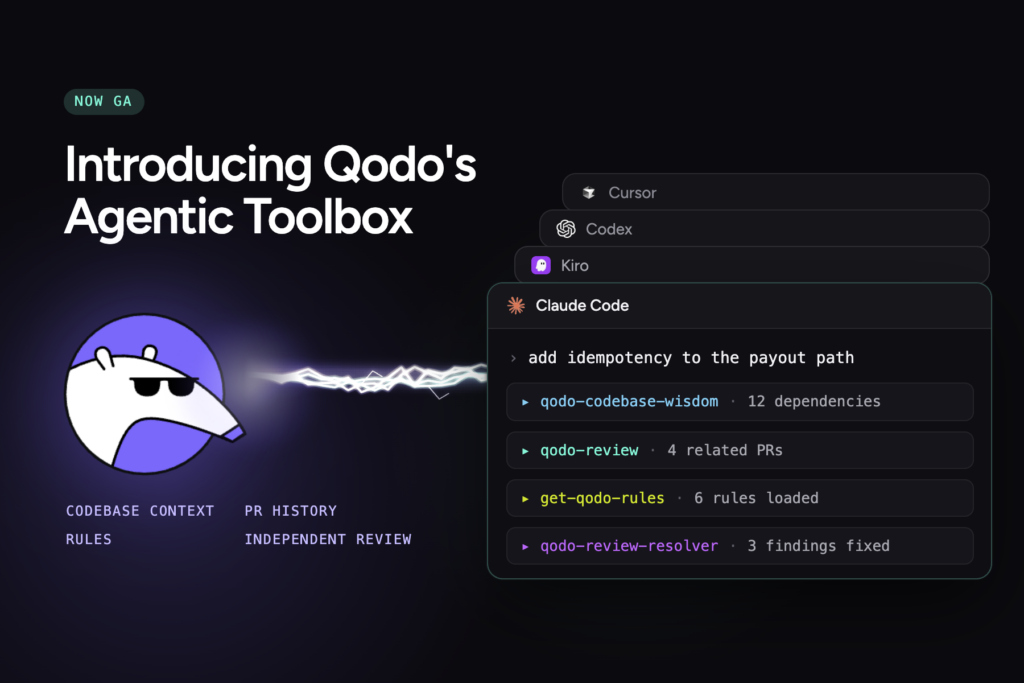
Give coding agents a quality counterpart
Make review, organizational context and rules available wherever coding agents work.

Bring independent review across the SDLC
High-precision multi-agent code review across the SDLC, with full codebase context.

Build a system of record for code quality
Turn review activity into a shared history of quality decisions across the organization.
High-precision review on every change
Specialized review agents reason over full codebase context to flag real bugs, rule violations, and requirements gaps with less noise.
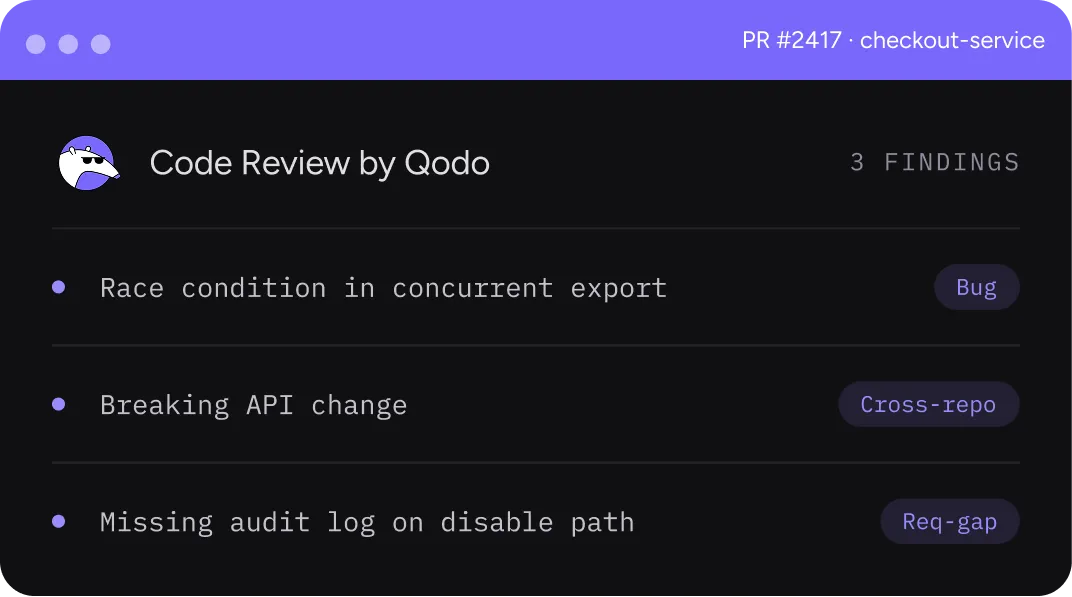
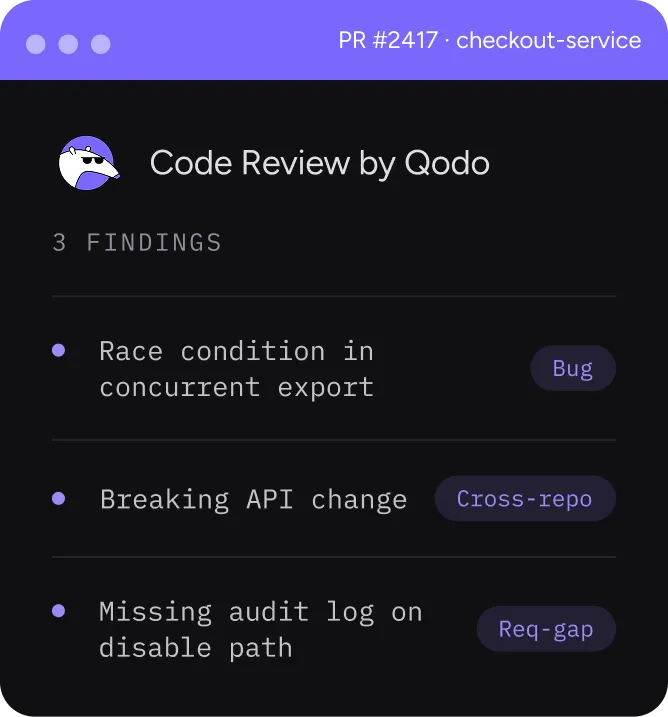
Context aware PR review
Specialized agents run on every pull request, surfacing real bugs, rule violations, and requirement gaps with full codebase context.
Shift left review skills
Review skills that run inside the developer’s agent, surfacing rules, findings, and fixes earlier in the lifecycle.
Local review workflows
Resolve issues in context. Developers fix flagged code, validate changes, and ship faster without leaving the editor.
Deterministic, enforceable standards
Self-learning rules turn organizational knowledge into machine-readable standards every developer, reviewer, and AI agent can follow.
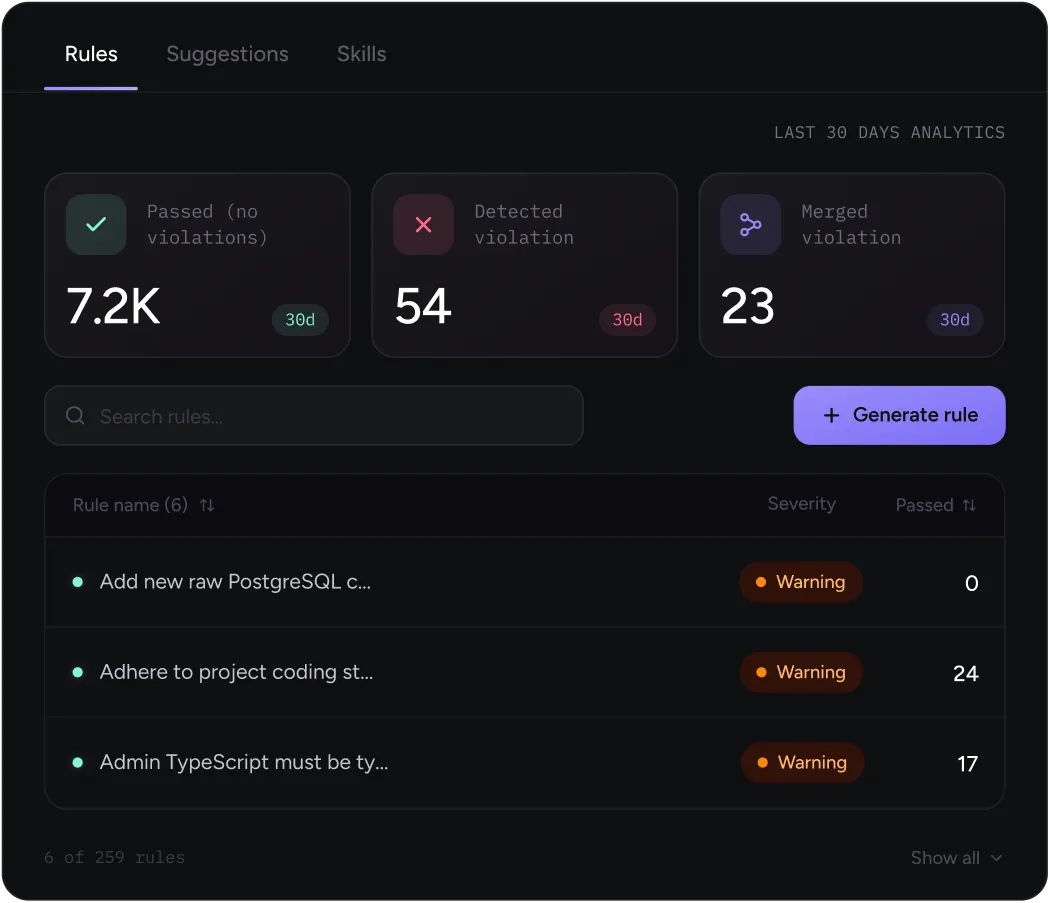
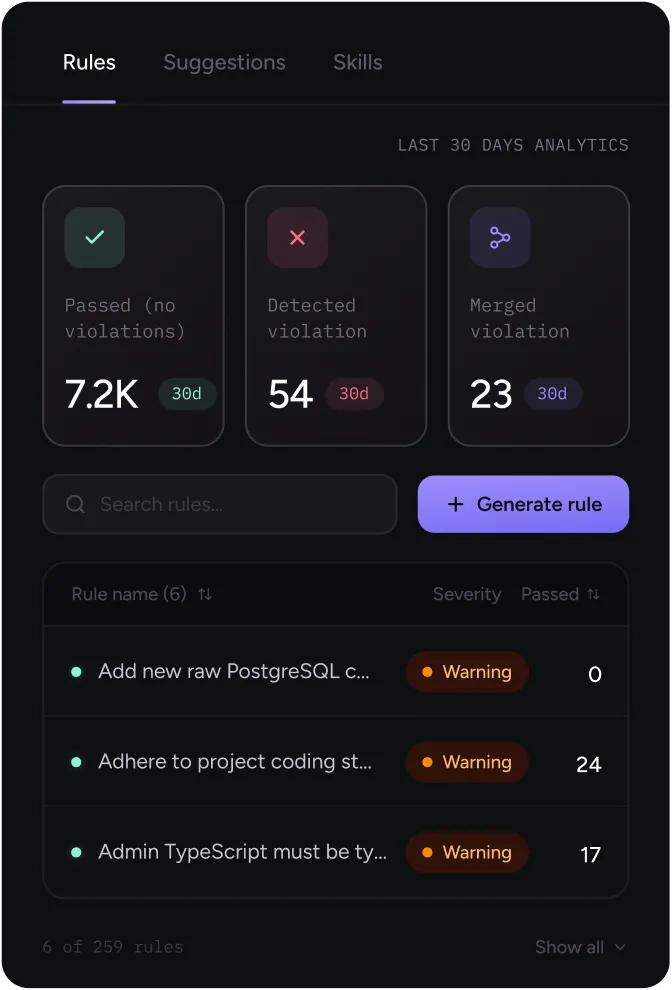
From wikis to agent-enforceable rules
Rules self-learned from patterns, conventions, and architectural decisions from your codebase and PR history.
See if your rules being enforced
Monitor and understand the impact of rule violations, and track how often issues are resolved before code is merged.
Maintain rule health
Rule effectiveness gets measured continuously, with conflicts and decay surfaced before they erode trust.

Risk intelligence

Audit trail

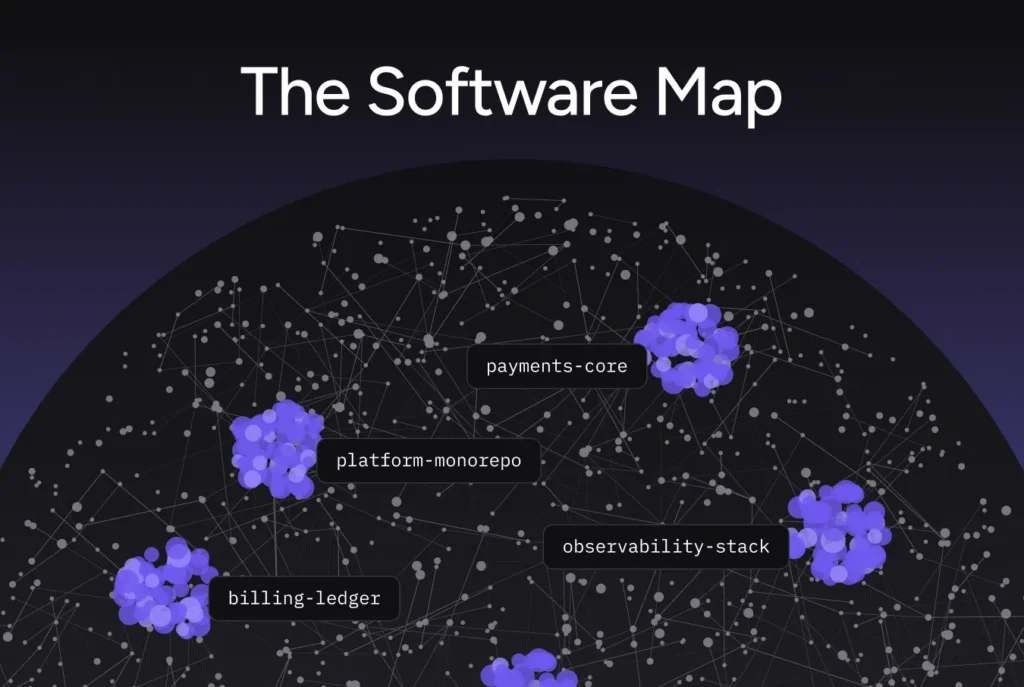
Repo relationship mapping

System of record
State of the art context engineering
Purpose-built for agentic code review, Qodo’s context engine pulls context from across various context sources to provide a continuous, multi-dimensional understanding of complex coding environments.
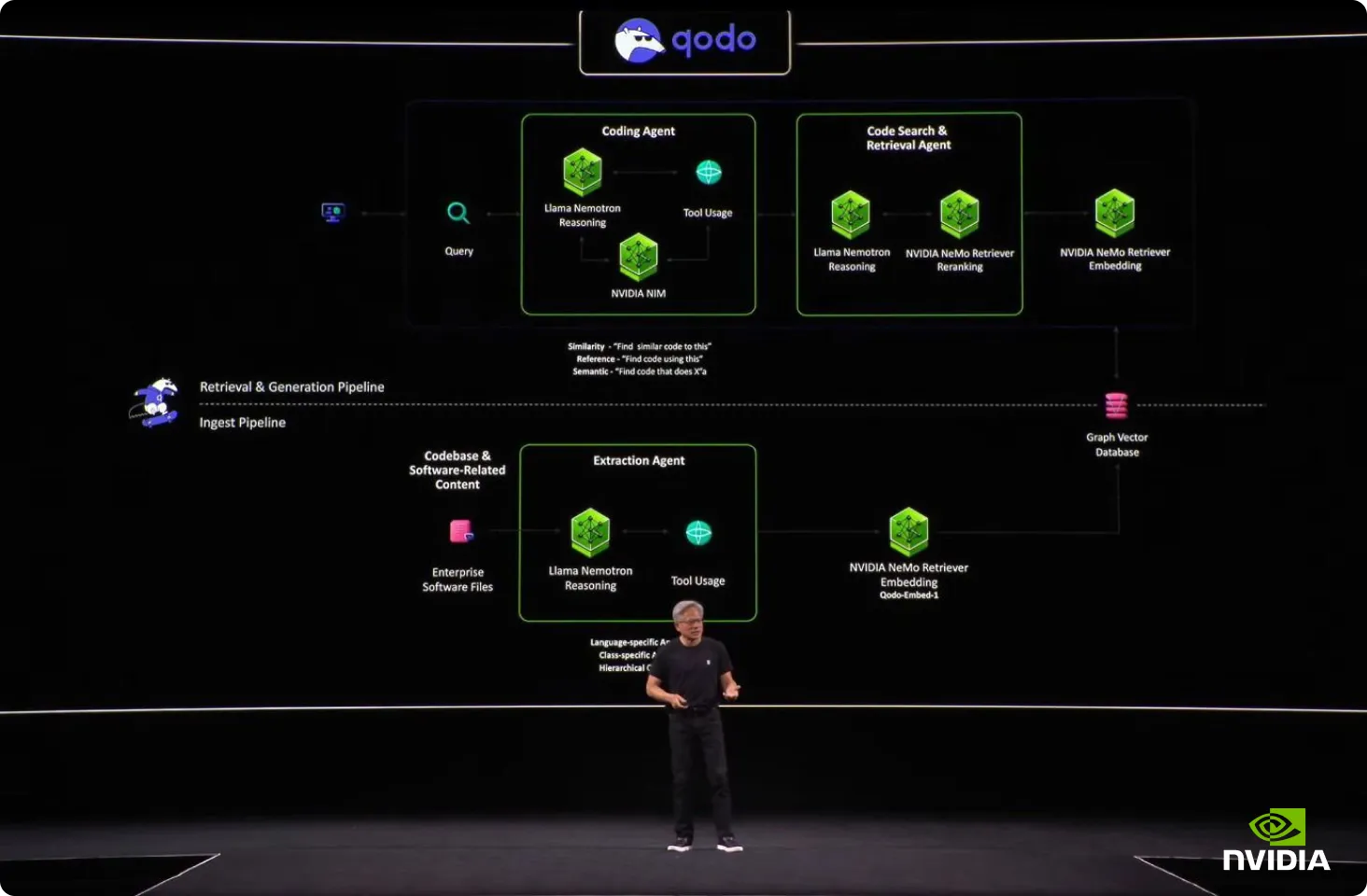
Jensen Huang shares how Qodo’s context engine provides deep agentic code search and retrieval for engineering teams at NVIDIA.
Automatically discover and enforce your team’s unique coding standards for total consistency.
Builds a deep understanding of your repositories, from structure to dependencies, to see how every change fits.
Indexes past PR code diffs, comments, discussions, and fixed issues to filter for the most critical and relevant issues.
Aligns technical execution with project goals by pulling context directly from your tickets and specs.






How Qodo Works
Review as you write, fix as you go, ship with confidence.

Recents posts from our blog
Check out our musings on generative AI, code integrity, and other geeky stuff:
We take security, privacy and compliance seriously.
AI code review, built for enterprise grade security.
Zero data retention
Your code is analyzed and discarded. Nothing stored, logged, or used to train models.

SOC 2 Type II certified
Independently audited security controld, not just a self-attestation.
On-premises deployment
Deploy entirely within your own infrastructure, with no external data exposure.

Single-tenant deployment
Your own dedicated instance – no shared infrastructure, no shared risk.
Questions?
Qodo is an AI code review and governance platform for engineering teams shipping at the speed AI writes code. Qodo reviews every pull request with full, cross-repo codebase context, enforces your coding standards, and governs the AI tools and agents shaping how code gets built.
Qodo runs across two main surfaces, with the same context and review standards in each:
- IDE — real-time code validation while you code
- Git — high-signal pull request reviews
See the platform overview for the full picture.
Code review was designed for one developer, one PR, one senior reviewer who held the codebase in their head. AI breaks that model — coding agents generate and refactor faster than humans can review, while standards still live in wikis and senior engineers’ heads.
Process and discipline can’t scale to AI-speed volume. What’s needed is a governance harness — quality, standards, and AI tool oversight treated as infrastructure rather than process. Read the full thinking in AI Gave Teams Velocity. The Governance Harness Comes Next.
Qodo is built on three things that make a difference between a useful code review tool and a noisy one:
- Precision over volume — specialized agents reason over your full codebase, not just the diff, which is how Qodo holds the highest F1-score on the AI code review benchmark.
- Depth and speed together — full-context review without slowing the PR down.
- Standards that stay current and governed in one place – Rules mined from your PR history, skills surfaced from across your repos, every one enforced on each change and refined by what reviewers accept or reject.
The result is fewer false positives, faster reviews, and a quality bar that holds as your team scales.
Wikis go stale. Linters miss intent. Manual rule writing produces dead documents within a quarter. Standards stay consistent only when they’re captured from how your team actually reviews, enforced before merge, and updated as the codebase evolves.
Qodo’s review standards system builds this loop into review. Rules Miner turns recurring PR comments and reviewer decisions into enforceable rules, automatically, while skills discovered across your repos become first-class standards you can govern the same way. Rules and skills run on every PR, decay when they stop being useful, and stay measurable through a central portal.
Most review tools see one repo at a time, so breaking changes in shared SDKs, APIs, or schemas only surface in production — where they’re most expensive to fix.
Qodo’s Cross Repo Review reasons across the repos that depend on each other, mapped out visually in the portal so the dependencies are clear at a glance. When a signature change in a shared library could break downstream consumers, Qodo flags it on the PR with a direct link to the affected line, before merge. It also reasons across Git providers, so a service in GitHub and its consumer in GitLab stay connected in the same review.
Review time drops when the first pass — summarizing the change, checking dependencies, flagging real bugs — happens automatically before a human opens the diff. What’s left is the high-judgment work where reviewer expertise actually matters.
Qodo’s review agents do this on every PR. Specialized agents handle critical issues, duplicated logic, ticket compliance, and rule violations, each delivering findings with severity and structured remediation. Teams report ~1 hour saved per PR and 90% of initial review handled before a human steps in. For the ROI framework, see Academy’s Business Case for AI Code Review.
AI-generated code fails in specific ways — logic errors, duplicated logic, hallucinated APIs, standards drift — that aren’t caught by linters or generic review. Shipping it safely at scale requires a dedicated verification layer that applies your standards regardless of who wrote the code.
Qodo is built for this. Review agents catch the failure patterns specific to AI-generated code, and Skill Review Standards govern the AI tools themselves — every skill file shaping AI behavior gets analytics, one-click enable/disable, and attribution on every finding. AI tools become a managed program, not invisible config
Yes — and unlike most review tools, Qodo applies the same Context Engine, the same rules, and the same review agents across every surface. A team using JetBrains on the IDE side and GitHub on the Git side gets the same standards enforced uniformly. With Cross Repo Review, Qodo even reasons across providers — a service in GitHub and its consumer in GitLab stay connected in the same review.
Setup takes minutes per repo, no platform migration required.
Git providers
- GitHub (cloud and Enterprise Server), GitLab (cloud and self-managed), Bitbucket (Cloud and Data Center), Azure DevOps. Gerrit on Enterprise.
IDEs
- VS Code, JetBrains (IntelliJ, PyCharm, WebStorm, GoLand, CLion, RubyMine, PhpStorm), Visual Studio.
Languages
- All major languages — Python, Java, JavaScript, TypeScript, Go, C#, .NET, Swift, Kotlin, Ruby, PHP, C++. Full list on the language support page.
Qodo’s Pro Team plan is credit-based at $0.012 per credit, pooled across the team. You buy a credit pack, run reviews against the pool, switch packs anytime, no annual commitment.
- 2,500 credits — ~18 reviews/month
- 5,000 credits — ~36 reviews/month
- 20,000 credits — ~144 reviews/month
The 14-day free trial includes unlimited reviews and credits, no credit card required.
Enterprise plans add SSO/SAML, BYOK, single-tenant or on-prem deployment, and priority support. Details on the pricing page.
Buyers evaluating AI code review tools come back to four questions: is our code retained, who audited the controls, can we control the model, and can we deploy in our own infrastructure. Qodo answers all four:
- Zero data retention — code is analyzed and discarded. Nothing stored, logged, or used to train models.
- SOC 2 Type II certified through independent audit.
- BYOK — bring your own OpenAI, Anthropic, Azure OpenAI, or self-hosted models.
- Flexible deployment — single-tenant SaaS, on-prem, or air-gapped.
Full details in the Qodo Trust Center.